2023年5月,我开始在伦敦举办小型的艺术疗愈工坊,邀请有进食障碍或焦虑问题的人群参与绘画活动。我给这个工坊取名为“周末俱乐部”,旨在创造一个轻松、愉悦的氛围,让参与者感到无负担地融入其中。工坊的目标是提供一个安全、包容的空间,通过艺术表达来探索情绪和自我。
在这个工坊中,参与者有机会通过绘画来表达内心的情感和体验。第一次工坊的主题是绘画自画像,参与者用画笔和颜料勾勒出自己的形象,并在画作中展现出个性和情感。这个过程不仅让参与者与自己建立了更深入的联系,也为他们提供了一个自我表达的机会。
第二次工坊的主题是绘画情绪。参与者通过绘画来探索和表达自己此刻的情绪状态。他们可以用颜色、形状和线条来呈现内心的喜怒哀乐,将情感转化为艺术作品。这个活动让参与者更加敏感地观察和认识自己的情绪,从而促进情绪的理解和处理。
通过这两次工坊,参与者不仅有机会发展艺术技巧和创造力,还能够与其他人分享彼此的作品和心路历程。工坊中的交流和互动为参与者提供了支持和鼓励,帮助他们建立起更强大的情感连接和共鸣。
未来,“周末俱乐部”将继续举办更多的工坊,探索更多主题和创作形式,为参与者提供更多的艺术疗愈机会。这个工坊将持续为那些受进食障碍或焦虑困扰的人们提供一个安全、有益的空间,促进他们的情绪释放、自我认知和心理健康的提升。
In May 2023, I started organizing small art therapy workshops in London, inviting individuals with eating disorders or anxiety to participate in painting activities. I named the workshop “Weekend Club” with the aim of creating a relaxed and enjoyable atmosphere where participants could feel free to join without any burdens. Currently, the workshop has been held twice, with the first workshop focusing on self-portraits and the second workshop exploring emotions through painting.
The “Weekend Club” provides a safe and inclusive space for participants to engage in art expression and delve into their emotions and self-discovery. In this workshop, participants have the opportunity to use painting as a means of conveying their inner feelings and experiences. During the first workshop, they used brushes and colors to depict their own image, expressing their individuality and emotions through their artwork. This process not only deepens their connection with themselves but also provides them with a platform for self-expression.
The second workshop centered around the theme of painting emotions. Participants were encouraged to explore and express their current emotional states through art. Using colors, shapes, and lines, they translated their feelings into artistic creations. This activity enabled participants to develop a heightened sensitivity towards their emotions and facilitated a better understanding and processing of their emotional well-being.
Through these workshops, participants not only have the opportunity to develop their artistic skills and creativity but also to share their artwork and personal journeys with others. The workshops foster an environment of support and encouragement, enabling participants to establish stronger emotional connections and resonance.
Looking ahead, the “Weekend Club” will continue to organize more workshops, exploring various themes and creative forms, to provide participants with further opportunities for artistic healing. The workshop will continue to serve as a safe and beneficial space for individuals struggling with eating disorders or anxiety, promoting emotional release, self-awareness, and psychological well-being.
Chapter 1
自画像工坊/Self-portrait Workshop

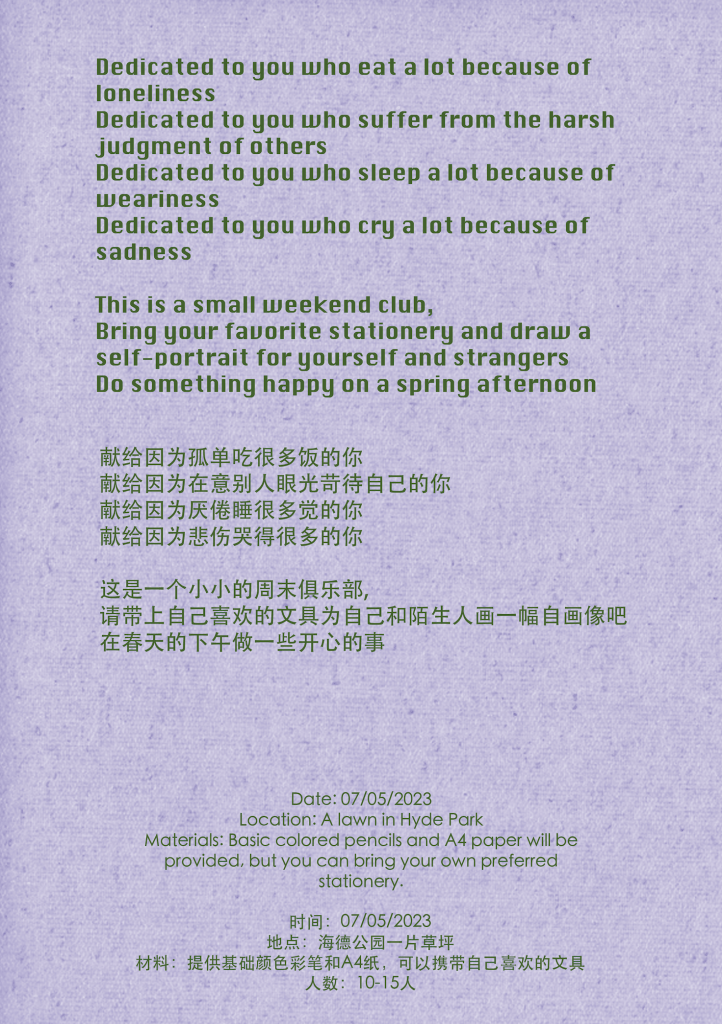
原计划在海德公园进行的工坊因为持续的雨天不得不作出调整,但幸运的是,我的朋友慷慨地提供了她家的客厅作为举办活动的场所。这个意外的改变让我们的活动转移到了室内。尽管由于场地限制,参与人数从原先的15人减少到了9人,但我们的小团体依然包含了一些之前参与过访谈的进食障碍患者,还有一些与我同专业的同学以及在英国生活或学习的朋友们。 这个小而温馨的聚会给了我们一个更加亲密和私密的环境,让参与者能够更自由地分享和表达他们的经历和感受。室内的氛围营造了一种亲近和信任的氛围,让每个人都感到放松和舒适。我们坐在一起,围绕着艺术疗愈和进食障碍展开了深入的讨论和交流。
The workshop, originally planned to take place in Hyde Park, had to be adjusted due to continuous rainy weather. Fortunately, my friend generously offered her living room as an alternative venue for the event. This unexpected change allowed us to move the activities indoors. Although the venue had limitations in terms of space, the group size was reduced from the initial 15 people to 9. However, our small gathering still included individuals who had previously participated in interviews about their experience with eating disorders, as well as some classmates from my field of study and friends who were living or studying in the UK.
This intimate gathering provided us with a more cozy and private environment where participants felt free to share and express their experiences and feelings. The indoor setting created an atmosphere of closeness and trust, allowing everyone to feel relaxed and comfortable. We sat together, engaging in in-depth discussions and exchanges about art therapy and eating disorders.
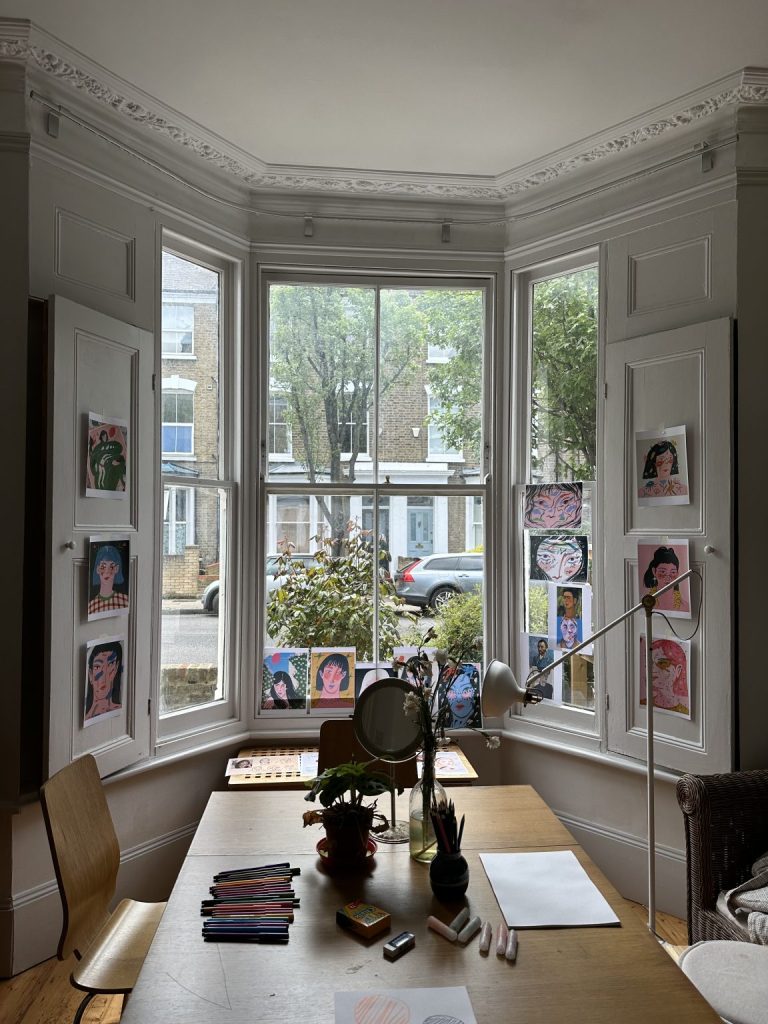
The site has a cosy and delightful atmosphere.
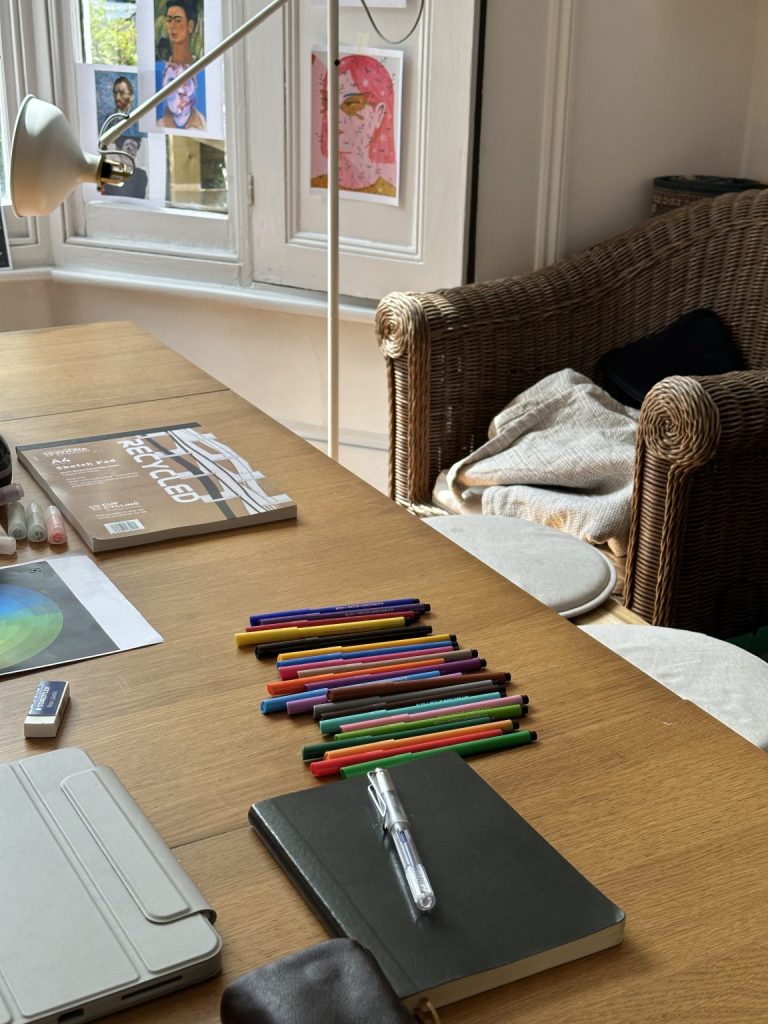
I have prepared the painting materials.
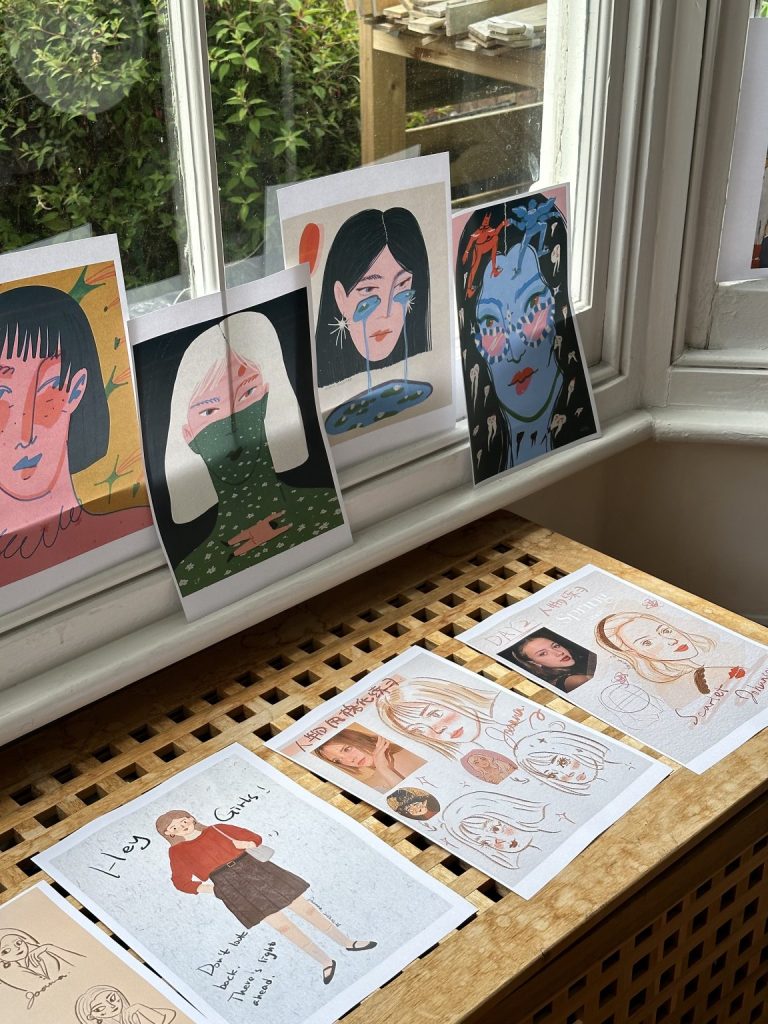
Different styles precedents
在活动开始前,我邀请大家自我介绍,然后玩一个破冰小游戏“情绪泡泡”(Emotional Bubbles),在画纸上画出一些不同颜色的圆圈,然后让参与者用不同颜色的笔在每个圆圈里填充自己此时此刻的心情。这个游戏可以帮助参与者探索和表达自己的情感,并且可以让他们了解自己情绪的变化和原因。
一轮游戏结束后,参与者大多会在颜色鲜明的泡泡内写上积极的情绪,反之在颜色暗淡的泡泡内写上消极的情绪。
Before the activities begin, I invite everyone to introduce themselves and play an ice-breaking game called “Emotional Bubbles.” Participants will be provided with sheets of paper containing various circles of different colors. They will use different colored pens to fill each circle with their current emotions. This game helps participants explore and express their feelings while gaining insights into the fluctuations and underlying causes of their emotions.
After completing one round of the game, participants often tend to write positive emotions within the vibrant and colorful bubbles, while negative emotions are expressed within the dull and dim bubbles.

Different emotional bubbles
主要活动分为两个环节。第一个环节中,参与者将获得纸张,在上面绘制自己的肖像,并加上最近一餐的食物,或者使用动物或植物的符号来表达当前的情绪状态。这个绘画阶段预计持续约30分钟。完成肖像后,参与者将有大约5分钟的时间与其他人分享和解释他们的作品。
进入第二个环节,我将参与者分成2-3人的小组,让他们先讨论各自最喜欢的食物,探讨与美食相关的个人偏好和经历。然后,参与者需要根据其他组员的故事,通过绘画描绘对方的肖像。第二个绘画阶段预计持续约30分钟。完成绘画后,参与者将再次有机会展示和解释他们的作品,促进小组之间更深入的理解和联系。
The main activities are divided into two parts. In the first part, participants will be provided with paper to create their self-portraits. They will incorporate the image of their recent meal or use symbols of animals or plants to express their current emotional state. This drawing phase is expected to last for approximately 30 minutes. After completing their portraits, participants will have around 5 minutes to share and explain their artwork with others.
Moving on to the second part, participants will be divided into groups of 2-3 people. They will first discuss their favourite foods, exploring personal preferences and experiences related to gastronomy. Then, based on the stories shared by their group members, participants will create portraits of each other through drawing. This second drawing phase is also expected to last for approximately 30 minutes. Once the drawings are completed, participants will have the opportunity to showcase and explain their artwork, fostering deeper understanding and connection among the groups.
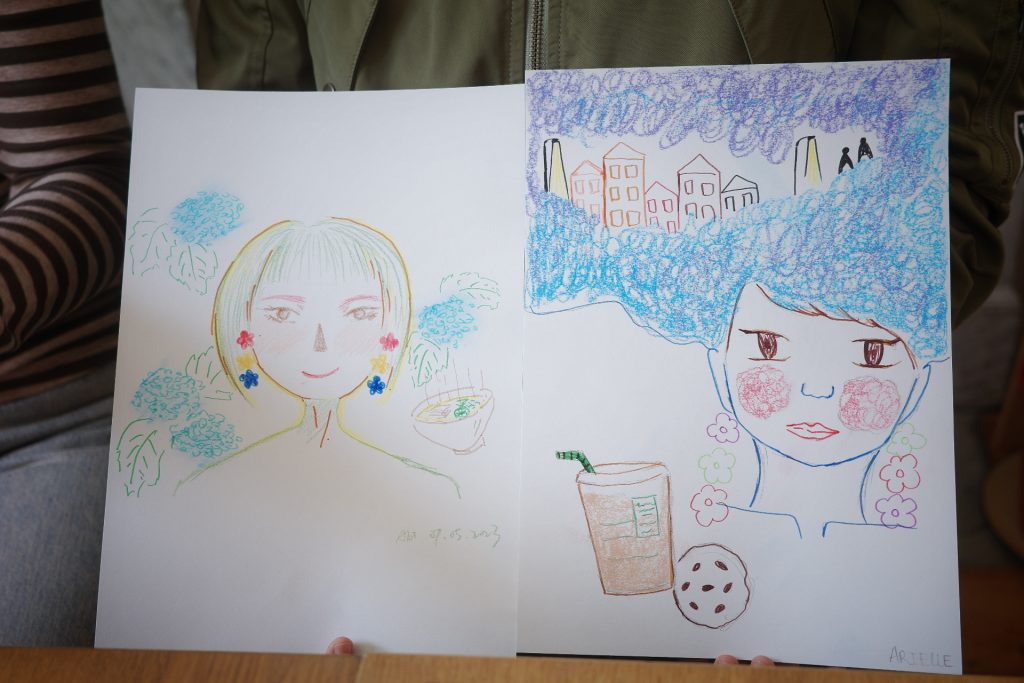

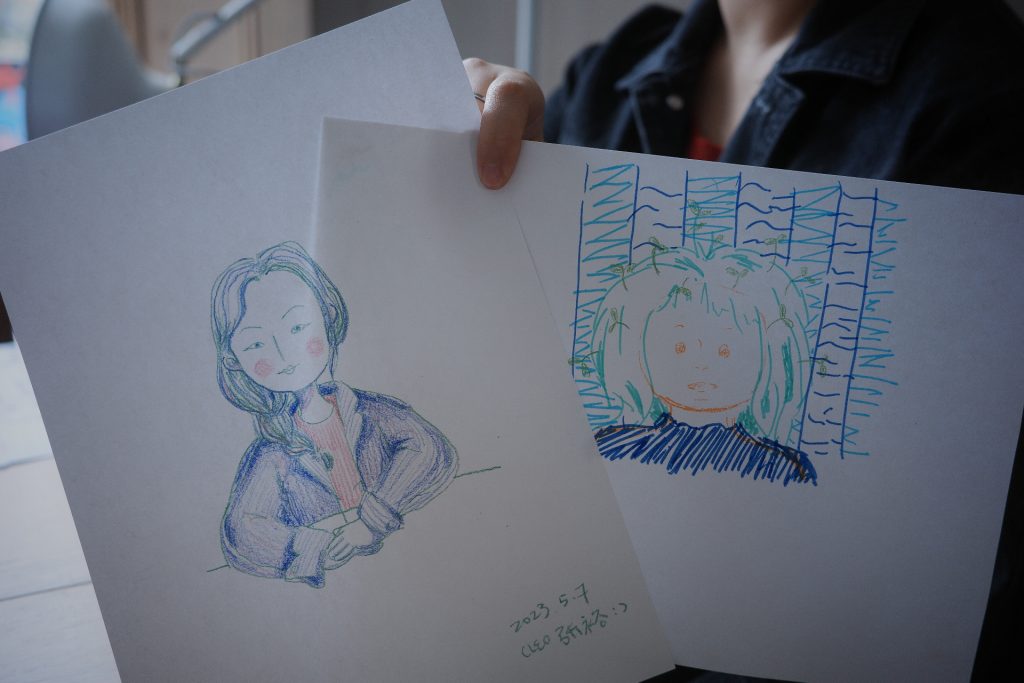


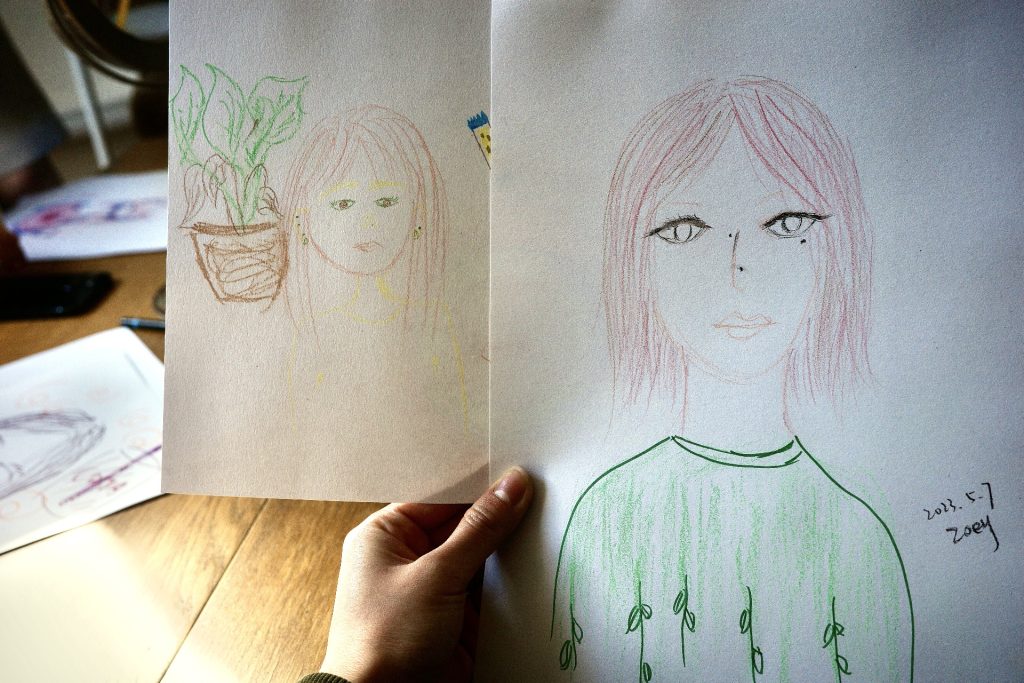
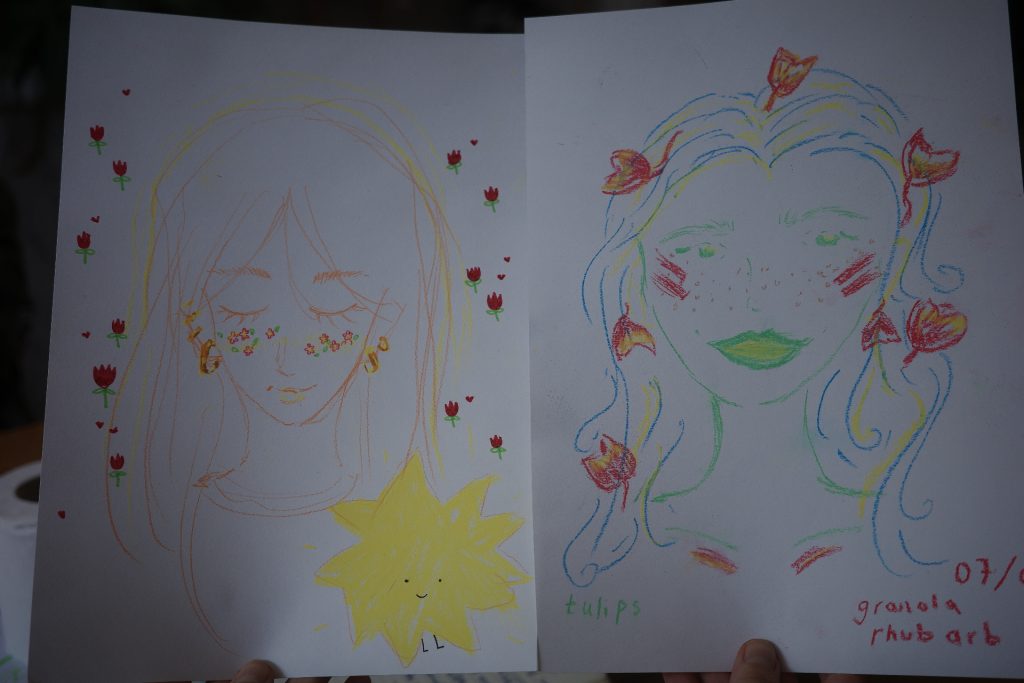

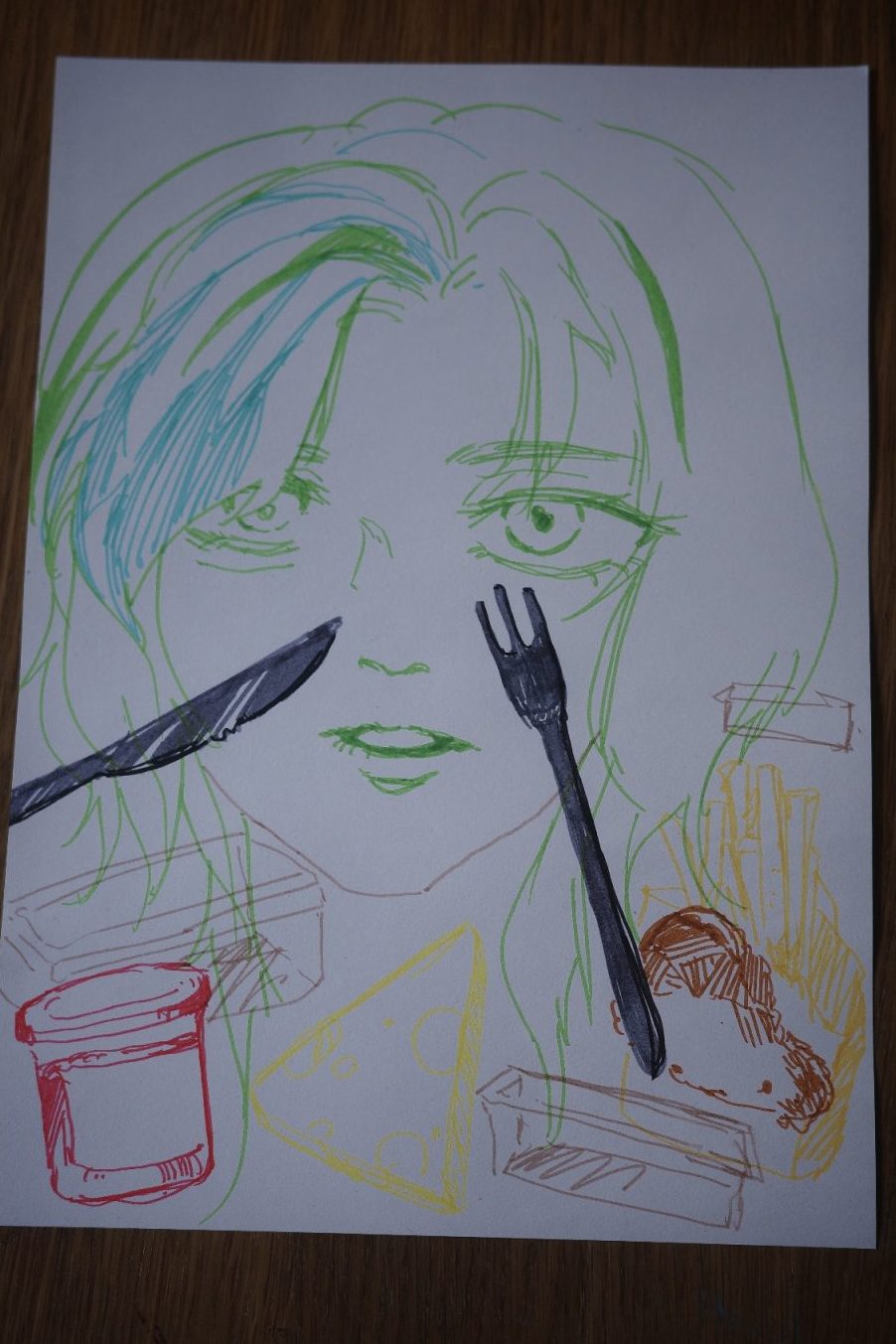
在展示和交流的过程中,参与者收到了来自同伴的积极评价和反馈,这让他们感到欣慰和鼓舞。通过与他人分享自己的绘画作品,参与者不仅得到了认可,还获得了对作品意义的新的理解和解释。此外,参与者在绘画的过程中也体验到了艺术疗愈的力量。通过表达情感和思想,他们获得了情绪释放和心理平衡的机会。这种艺术疗愈的效果有助于提升参与者的心理健康和自我认知,促进内在的成长和个人发展。
During the exhibition and sharing process, participants received positive feedback and recognition from their peers, which brought them a sense of comfort and encouragement. By sharing their artwork with others, participants not only gained validation but also gained new insights and interpretations of the meaning behind their creations. Additionally, participants experienced the healing power of art during the process of painting. By expressing their emotions and thoughts, they had the opportunity to release their feelings and achieve psychological balance. The therapeutic effect of art helped enhance participants’ mental well-being and self-awareness, fostering inner growth and personal development.
Chapter 2
绘画情绪工坊/Drewing Your Emotion Workshop
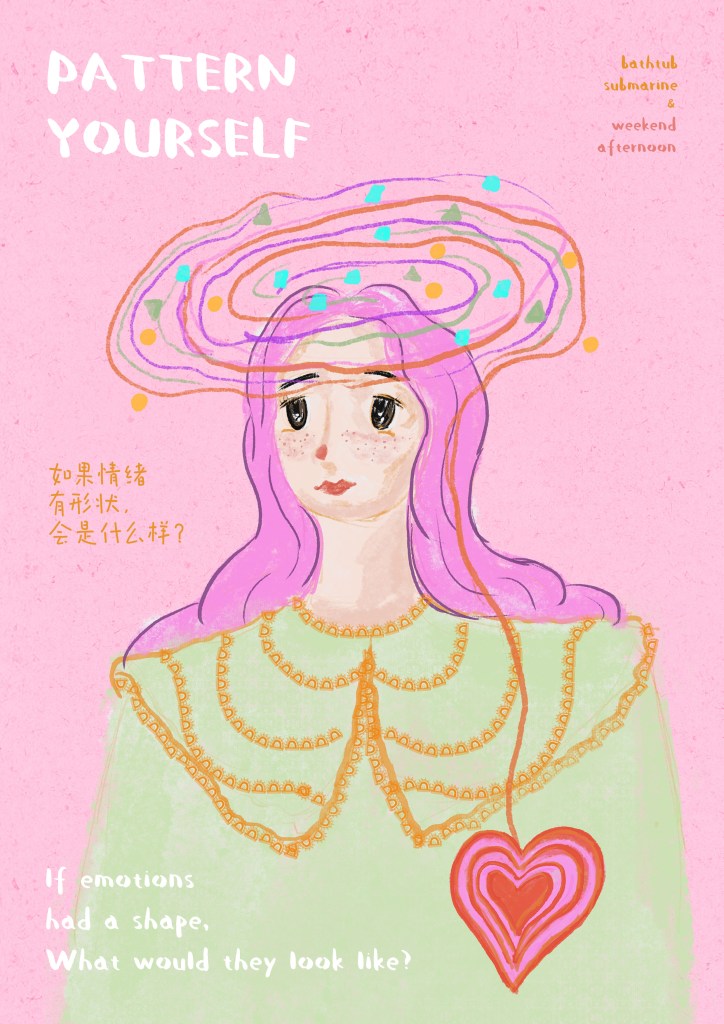
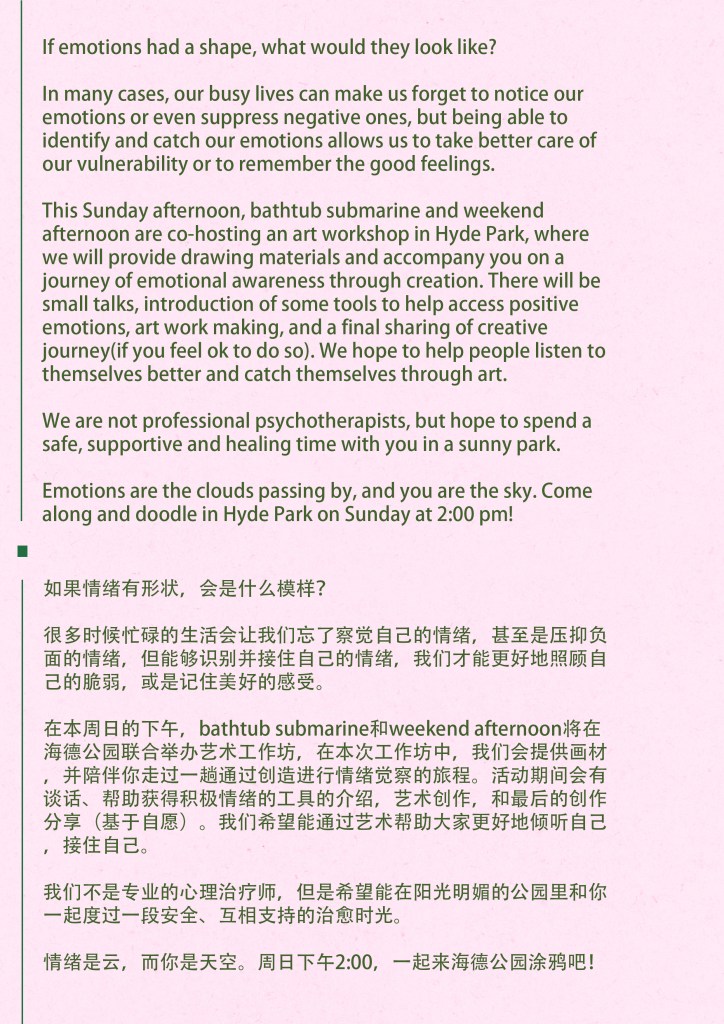
这次工坊是与我的同学Jiqiu Zhang(化名为bathtub submarine)一起举办的。她的研究课题是“焦虑情绪可视化”,而进食障碍症恰好是焦虑症的一种表现形式。我们深感这两个课题有着共同的关联,于是决定联合举办这个工坊。参与者都来自艺术高校,他们在艺术表达方面具备一定的基础,能够更好地表达自己的想法和情感。 工坊在海德公园的一片草地上进行,周围环绕着茂密的大树,创造了一种私密的环境。这个环境为我们提供了一个温馨和亲密的空间,让参与者能够放松地参与和分享。工坊吸引了7位参与者的加入,其中包括患有进食障碍的个体、焦虑症患者以及背负学业压力的艺术学生。这些参与者对艺术和创作充满了热情。我们一同聚集在那片草地上,利用绘画、插画以及其他艺术形式来探索进食障碍的主题。
The workshop was co-hosted with my classmate Jiqiu Zhang (pseudonym: bathtub submarine). Her research topic revolves around “Visualizing Anxiety Emotions,” which aligns well with the manifestation of eating disorders as a form of anxiety disorder. Recognizing the shared connection between these two subjects, we decided to collaborate and organize this workshop. The participants were all from art schools, possessing a certain level of artistic expression skills that allowed them to better articulate their thoughts and emotions.
The workshop took place in a grassy area within Hyde Park, surrounded by lush trees, creating a secluded environment. This setting provided a warm and intimate space for participants to relax and engage in sharing. The workshop attracted the participation of seven individuals, including those struggling with eating disorders, individuals with anxiety disorders, and art students burdened by academic pressures. These participants were passionate about art and creativity. We gathered together on that patch of grass, utilizing painting, illustration, and other artistic forms to explore the theme of eating disorders.
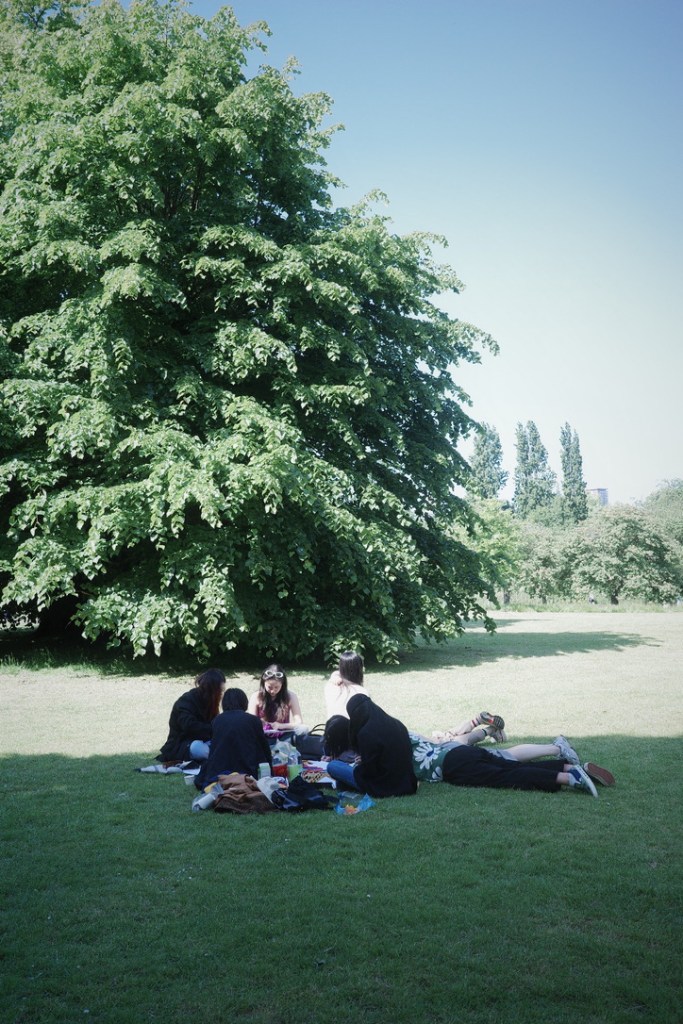
Surrounded by large trees to create a private environment
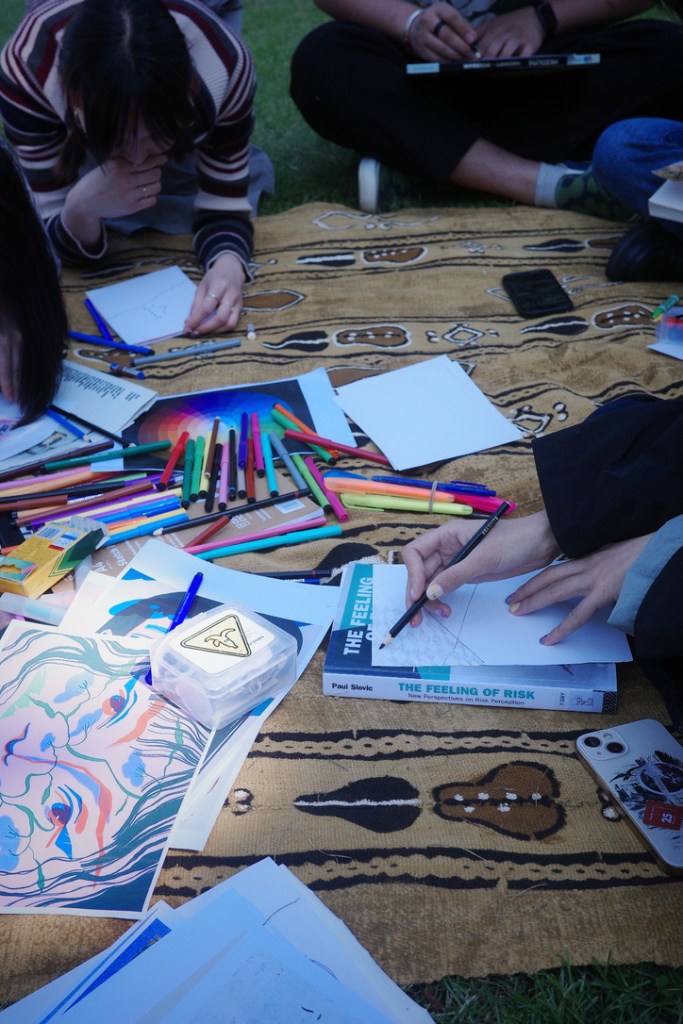
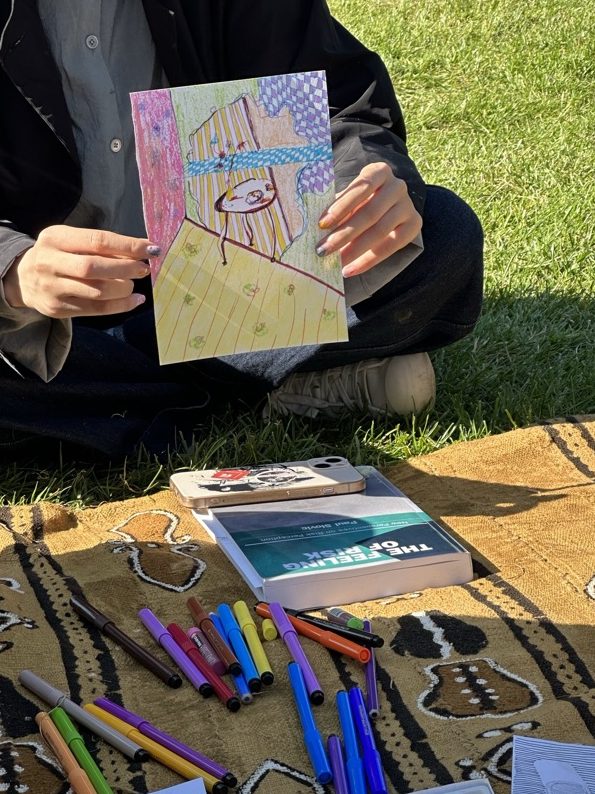
Participants drawing emotions

Sharing emotions
活动主要分为两个环节。考虑到参与者都是在英国生活的中国人,我们设计了第一个环节,邀请他们画出在伦敦生活中最孤独的时刻。参与者有30分钟的时间来表达自己的想法,并随后分享和交流自己的故事。
第一个环节结束后,我们引导参与者进行一个小型的冥想活动,名为”感恩之流”(Grateful Flow),灵感来自美国著名心理咨询师Stutz。这个活动旨在帮助参与者享受当下轻松的时刻,培养对生活更加积极的态度。
接着,我们进入下一个环节,参与者被邀请画出当前的情绪状态,可以包括几何形状、周围环境、房间家具等一系列物品。参与者有30分钟的时间完成作品,然后再次分享和交流彼此的图画。 通过这两个环节,参与者可以通过艺术表达和分享,更好地理解自己的情感和体验,同时也促进了彼此之间的互动和交流
The activity is divided into two main segments. Considering that the participants are Chinese individuals living in the UK, we designed the first segment to invite them to depict their most lonely moments during their life in London. Participants were given 30 minutes to express their thoughts and emotions through art, followed by sharing and discussing their stories.
After the conclusion of the first segment, we guided the participants through a small meditation activity called “Grateful Flow,” inspired by the renowned American psychotherapist Stutz. This activity aimed to help participants enjoy the present moment and cultivate a more positive outlook on life.
Following this, we proceeded to the next segment, where participants were invited to draw their current emotional state, including geometric shapes, surroundings, room furnishings, and other elements. Participants had 30 minutes to complete their artwork, followed by another round of sharing and exchanging their drawings. Through these two segments, participants had the opportunity to better understand and express their emotions and experiences through artistic expression and sharing. This facilitated interaction and communication among the participants, fostering a deeper connection among them.
感恩之流 The Grateful Flow
(正如Phil Stutz和Barry Michels在为Goop撰写的一篇文章中所描述的那样。As Phil Stutz and Barry Michels described in an article for Goop.)
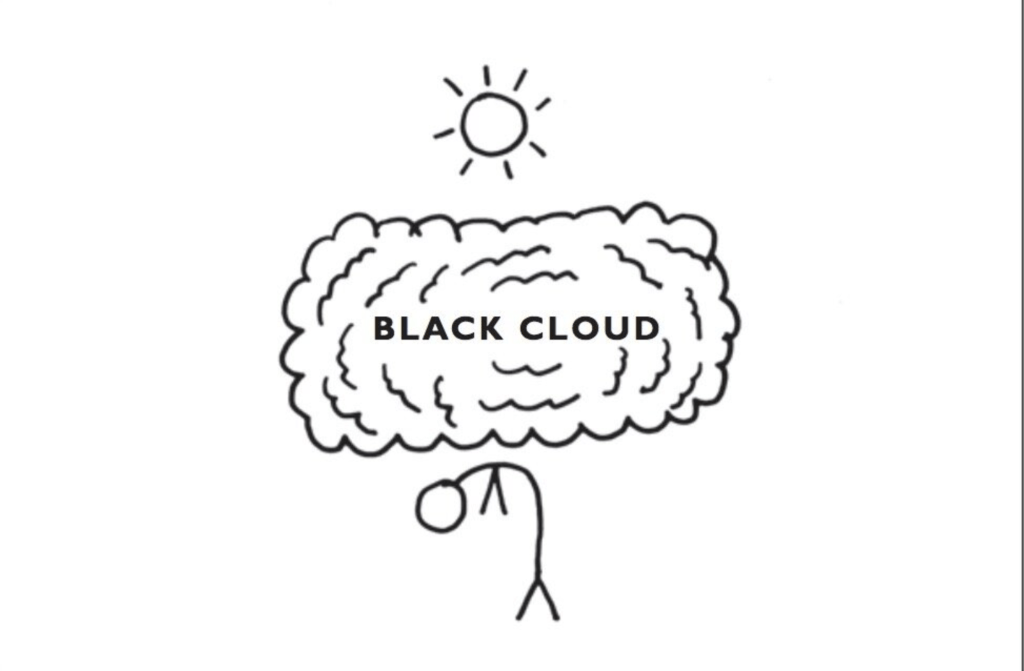
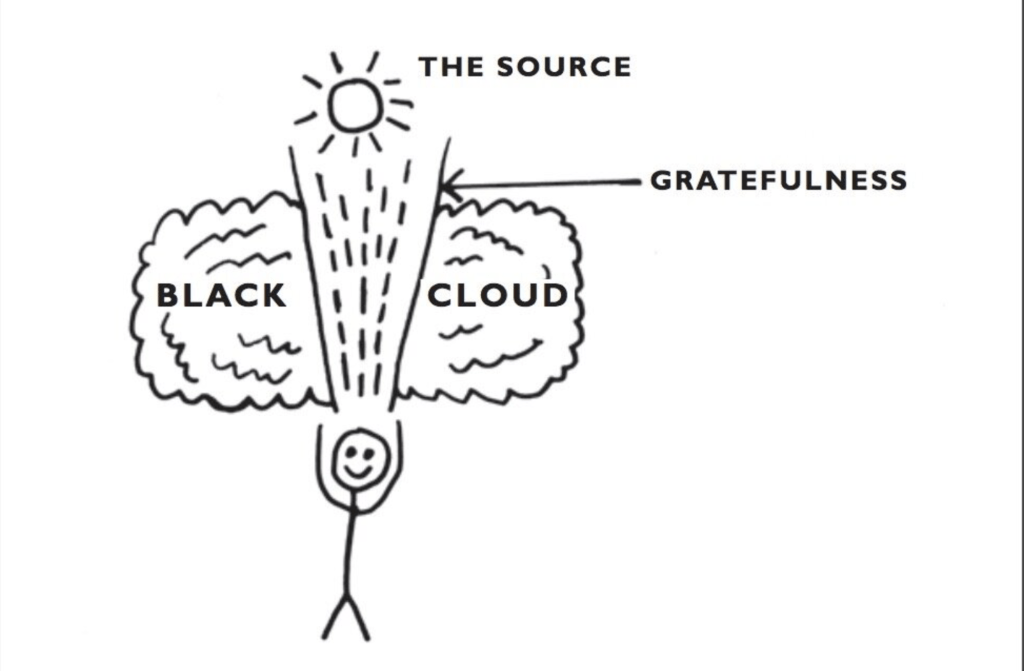
- 开始默默地表达对特定事物的感恩之情,特别是那些你通常认为理所当然的事物。(你也可以包括那些你庆幸没有出现在你的生活中的事物。)缓慢地进行。感受每个事物带来的感激之情。尽量每次使用这个方法时都列出新的事物。
- 大约30秒后,停止思考,专注于感激之情的身体感受。你会感受到它直接来自你的内心。你所散发的这种能量就是感恩之流。
- 当这种能量从你的内心传播出来时,你的胸膛会变得柔软而敞开。在这种状态下,你会感受到一种压倒性的存在向你靠近,充满着无限给予的力量。你与源头建立了联系。
- Start by silently stating specific things you’re grateful for, particularly things you usually take for granted. (You can also include things you are thankful are not in your life.) Go slowly. Feel the gratefulness for each item. Try to create new things for the list each time you use the tool.
- After about 30 seconds, stop thinking and focus on the physical sensation of gratefulness. You’ll feel it coming directly from your heart. This energy you are giving out is a Grateful Flow.
- Your chest will soften and open as this energy emanates from your heart. In this state, you will feel an overwhelming presence approach you, filled with the power of infinite giving. You’ve made a connection to the Source.
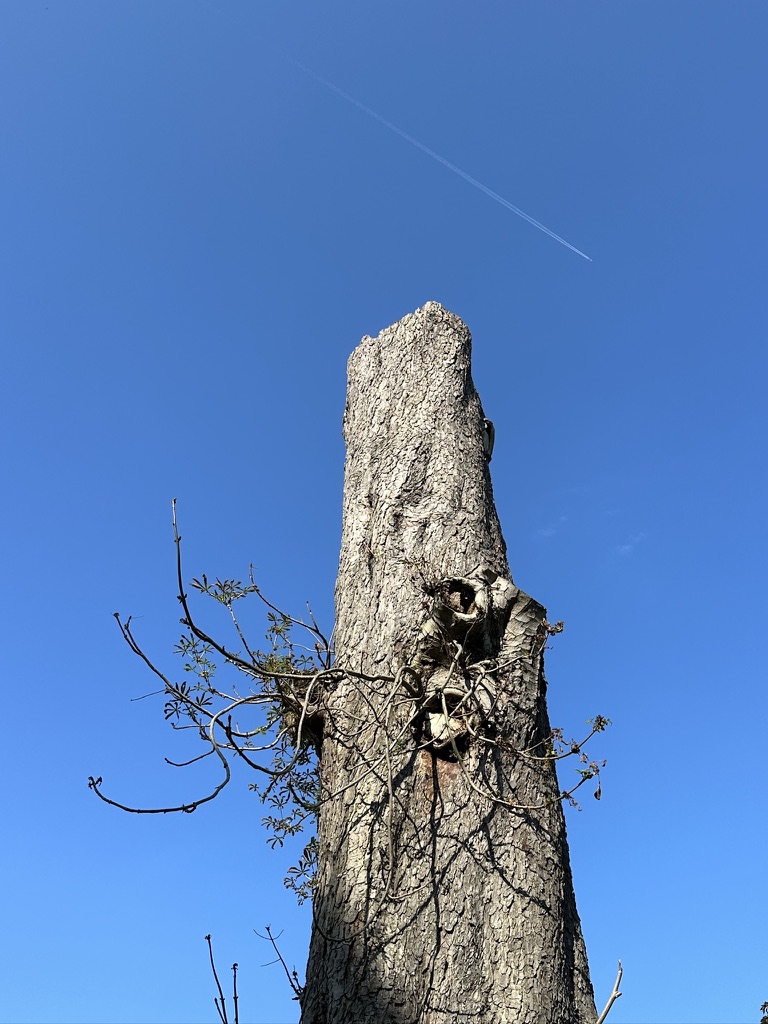
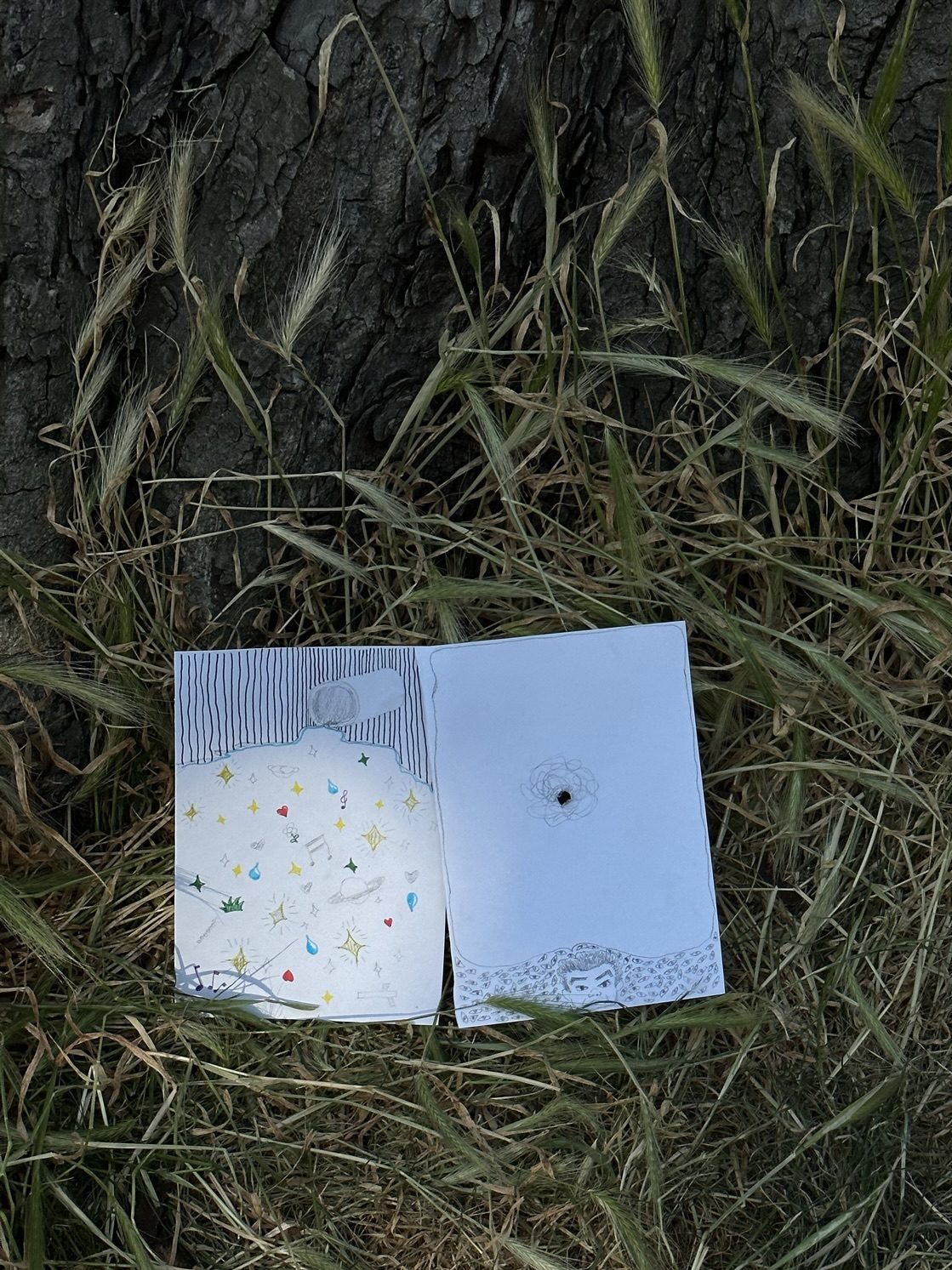
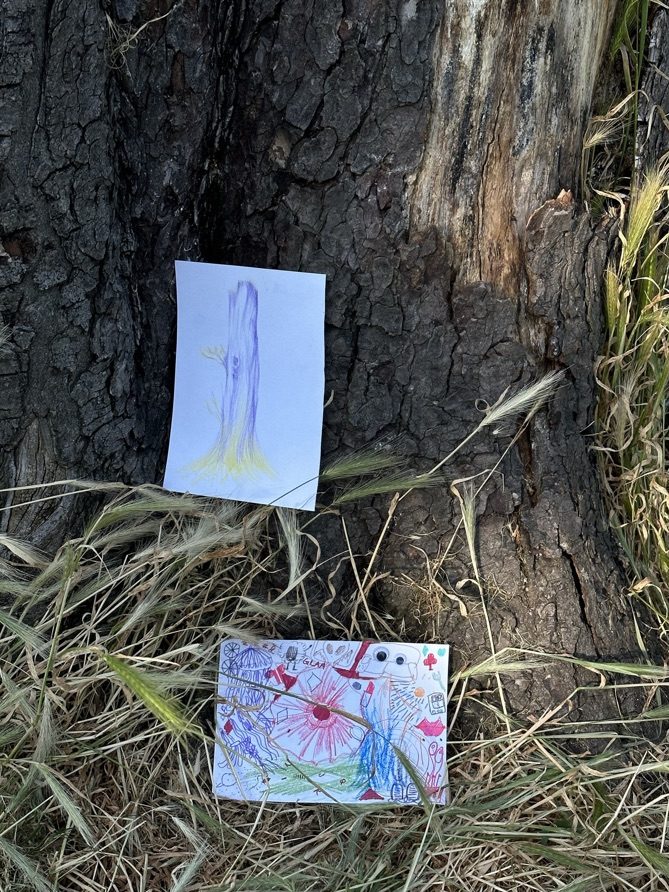
大树下的即兴展览
Pop up exhibition under the tree


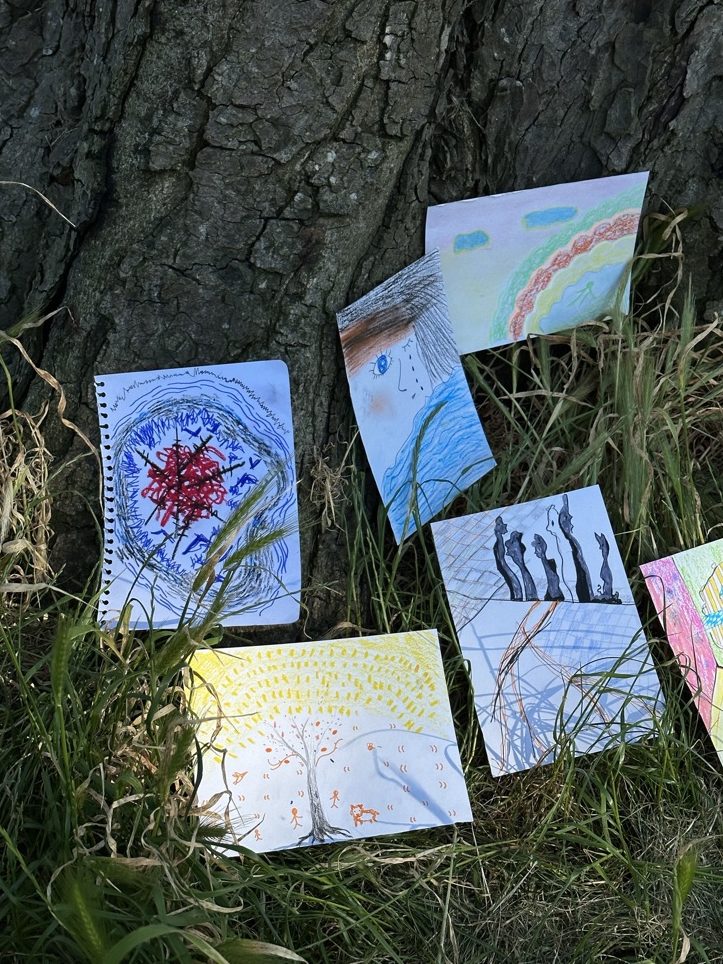


在第二次活动中,与Jiqiu的合作使我受益匪浅。通过与她的交流和观察,我获得了许多新的想法和观点。这次合作给予了我更客观的视角来观察参与者的经历和情感。相较于第一次活动,我更深刻地感受到人与人之间的联系,这种联系无形却充满能量,让我深感触动。
在与参与者互动的过程中,我意识到我们每个人都有着共通的体验和情感,这使我更加珍视人与人之间的联系和理解。我们通过分享作品和故事,将进食障碍的体验和情感展现出来,彼此之间产生了深刻的共鸣。在这个特殊的环境中,我们共同创造了一个包容和支持的氛围,鼓励每个人真实地表达自己。
这次工坊不仅是一个学习和创作的机会,更是一个共同探索和交流的平台。我们共同努力,共同探索,为艺术和心理健康搭建了一座桥梁。不论是在海德公园的草地上还是在室内的空间里,我们共同为这个工坊贡献了我们的努力和热情。这次合作无疑是成功的,我对这次机会深感感激,并期待将来能继续与Jiqiu或其他合作伙伴共同探索更多领域,为我们的创作和成长带来新的启发。
In the second workshop, the collaboration with Jiqiu proved to be highly beneficial for me. Through our discussions and observations, I gained new ideas and perspectives. This collaboration provided me with a more objective lens to observe the experiences and emotions of the participants. Compared to the first workshop, I had a deeper understanding of the connections between people, which are intangible yet filled with energy, leaving a profound impact on me.
During the interactions with the participants, I realized that we all share common experiences and emotions. This realization deepened my appreciation for the connections and understanding between individuals. Through sharing their artworks and stories, the participants were able to express the experiences and emotions related to eating disorders, creating a strong sense of resonance among them. Together, we fostered a nurturing and supportive atmosphere that encouraged everyone to authentically express themselves.
The workshop was not only an opportunity for learning and creativity, but also a platform for mutual exploration and exchange. We collectively strived to build a bridge between art and mental well-being, whether on the grassy field of Hyde Park or in the indoor space. Our joint efforts and exploration contributed to personal growth and unity. This collaboration with Jiqiu, and potentially with other partners in the future, holds great significance. It has allowed us to build bridges between art and psychological health, inspiring each other and expanding our horizons.
 shuangsspace