人类活动促成了食物的相聚,
食物的离合也在调动人类的聚散。
西方人称作“命运”,
中国人叫它“缘分”。
-《舌尖上的中国》
Human activities bring about the gathering of food.
The union and separation of food also stir human connection.
In the West, it’s called “Destiny”.
In China, it’s called “Fate”.
– “A Bite of China”
在巴黎的时候,我去了一家叫做“董氏豆腐坊“的中餐厅,这是一家在中国人中很受欢迎的温州早餐铺,有豆花油条,也有咸菜饼糯米饭。去过的温州朋友回来都说好。这家店在巴黎一区,在一个叫做Hôpital-Saint-Louis的街区,实际上这里已经变成了温州社区,当你到那的时候会发现周围全都是温州人,因为温州话变成了主体语言。
豆腐坊位于街头,出了地铁站后就能看到,这是一家小小的店铺,从窗外看就发现已经站满了人。店里的装潢还保留着九十年代的风格,但是窗明几净,能看出是被用心经营的店铺。店里布局简单,就是一排玻璃柜,一条走廊,还有一列桌椅。玻璃柜里,咸菜饼放一摞,油条堆一捆,麻球放一列,也许是遇上了新鲜出炉的一锅包子,整个柜台蒸气萦绕,热热闹闹,恍惚间仿佛回到了小时候的早餐店。柜后,是三位收拾利落的女士担任取货收银的角色,她们妆发精致,微笑地询问顾客吃什么,玻璃柜后还余有一部分桌面,点好的餐就像一条长龙一样整齐地排列,源源不断地输送到收银台。
我前面的老爷爷一看就是老主顾,熟练地插进队伍,操着一口温州话说:“给我来一碗豆花,两个咸菜饼,再来一斤豆腐,我搭路走(即打包带走)”。对话的卷发老板娘也心领神会,嘴上迎着好,手里对付着。此时另一位盘发老板娘飞快迎上来,笑吟吟地对我说:“来,吃什么?”我一路走来,心里排练了很多遍温州话,但可惜一张嘴还是露馅了,也许是发音不太准吧。拗口地点了一碗糯米饭后,我干脆用普通话继续点了一碗豆花和一个咸菜饼,字正腔圆,从容不迫。我端着早餐在熙熙攘攘中找到了一处空位坐下,感慨一番周折后终于可以吃早饭了。
温州的糯米饭一块蒸熟的糯米,上面撒着油条碎末,葱花和海米,然后一碗香菇熬成的肉末汤浇下,拌匀。我一般会从最底下的饭吃起,因为肉汤沉底,浸泡得久也更香。一勺捯起来,有饭,有油条碎,也有汤,时而夹杂着海米和葱花。一口吃下去,满足了我作为一个碳水爱好者的快乐。这家的豆花是咸的,咸浆配咸饭,倒也不冲突,豆腐尤其好吃,对比在欧洲而言。咸菜饼胜在了情怀,我小时候有一段时间住在温州老家,是上学前班的年纪,外婆是学校的老师,所以我和表哥表姐也在同一个学校上学。我们每天上学都会路过一个早点摊,小小的铁锅在门口支起来,日复一日地炸着咸菜饼。开店的老板是夫妻档,妻子在厨房擀面,丈夫在门口卖饼,除了小铁锅外,门口还有一口蒸锅,笼屉掀开,包子面包(即小馒头)蒸气腾腾地涌入眼前。有时候来不及在家吃早饭,就会在这家店买几样带走。我的表哥尤其爱吃这家的咸菜饼,上学的时候吃,放学的时候也吃,久而久之,感觉老板已经掐算好了时间,新鲜的面团下了锅,看到表哥背着书包走了,饼熟捞起,正好装袋给这位老主顾。小镇的时间总是要比大城市的漫长,这家小店,我的长辈吃过,我们吃过,到现在还在营业,也许等我的小外甥长大了,他的父亲即我的表哥,也会牵着他来吃。
豆腐坊的老板娘们,做事手脚麻利,有条不紊,温州话里夹杂着法语与食客谈笑风生。这也让我想起了家里的女性长辈们,温州人好像从来不会留在家乡,她们和丈夫在山东,在广东,在河北。总是要在一个陌生的地方闯一闯看一看,家乡的糯米饭魂牵梦绕,心中再想念,也是先把手头的营生做好再念。
当我看“饮食男女”的时候,当我翻阅汪曾祺散文的时候,我总是会被穿插在故事情节里的形形色色的食物吸引。最细致的镜头,最平实的文字,都让我对食物产生”共情”。
天南地北,烹蒸煎煮,人吃的是风味,也是风俗。人们种植食物,烹饪食物,咀嚼食物。食物让我们从时间和空间与多个国家和民族产生联结。食物也包含着个人情感,有欢聚也有离别,迎来送往,其中滋味也只有自己才能明白。
在2023年8月的时候,我对于“进食障碍”的研究到了中期阶段。这时候我对课题感到困惑。此前,我读到的心理学和社会学文献都是在西方学术语境下的产物。我想我需要做更多的本土化研究。因此我就在网上开始了一个小小的调研,探寻中国饮食和文化的关系。我收集到了很多年轻一代的家庭饮食故事,大家隔着网络婉婉道来最喜欢的食物,其中也夹杂着人生的酸甜苦辣。我根据这些故事画了一些插画。故事发布均已通过参与者同意,在此也感谢大家的分享。
While in Paris, I visited a Chinese restaurant called ‘Best Tofu.’ It’s a popular Wenzhou-style breakfast spot among the Chinese, offering items like tofu pudding with fried dough sticks, savory pastry with pickled vegetables, and sticky rice. Friends who had been to Wenzhou highly recommended it. The restaurant is located in the first arrondissement of Paris, in a neighborhood called Hôpital-Saint-Louis. In fact, this area has transformed into a Wenzhou community, where you’ll find mostly Wenzhou locals as Wenzhounese has become the predominant language.
The restaurant is situated on a street corner, visible as soon as you exit the metro station. It’s a small establishment, and from outside, you can see it’s already crowded. The decor retains a 1990s style, yet it’s clean and clear, indicating a well-maintained place. The layout is simple, with a row of glass counters, a corridor, and a line of tables and chairs. Inside the glass counters, pickled vegetable pastries are stacked, fried dough sticks are bundled, and sesame seed balls are neatly arranged. Perhaps there’s a fresh batch of steamed buns, as the entire counter is surrounded by steam, creating a lively and warm atmosphere reminiscent of childhood breakfast places. Behind the counter, three neatly dressed ladies efficiently play the roles of taking orders and handling payments. They are adorned with delicate makeup, smiling as they inquire about customers’ choices. Behind the glass counter, there’s also a portion of tabletop where ordered meals are lined up like a well-organized dragon, continuously delivered to the cash register.
The elderly man in front of me is clearly a regular. He skillfully joins the queue, speaking Wenzhounese, ‘Give me a bowl of tofu pudding, two pickled vegetable pastries, and a pound of tofu to go.’ The curly-haired lady at the counter understands him perfectly, responding with a warm greeting while efficiently preparing the order. Another curly-haired lady quickly approaches me, smilingly asking, ‘What would you like?’ Despite rehearsing Wenzhounese phrases in my mind along the way, my pronunciation gives away my non-native status. I awkwardly ordered a bowl of sticky rice and, switching to Mandarin, a bowl of tofu pudding and a pickled vegetable pastry. The order was placed confidently, and I found a seat amidst the bustling crowd, reflecting on the twists and turns before finally having breakfast.
Wenzhou sticky rice consists of steamed glutinous rice topped with fried dough crumbs, green onions, and dried shrimp. A meat sauce made from shiitake mushrooms is poured over it. I usually start from the bottom, as the meat sauce settles there, soaking the rice longer and enhancing the flavor. A spoonful captures rice, fried dough crumbs, and soup, occasionally containing dried shrimp and green onions. The satisfaction of indulging in this carb-lover’s delight is undeniable. The tofu pudding here is salty, matching well with the savory rice. The tofu, in particular, stands out in comparison to Europe. The pickled vegetable pastry evokes nostalgia. During my early years in Wenzhou, before starting school, I lived with my grandmother, who was a teacher at the school. My cousin and I attended the same school. Every day, on our way to school, we passed by a breakfast stall with a small iron pot set up at the entrance, frying pickled vegetable pastries day after day. The husband and wife team managing the stall consisted of the wife kneading dough in the kitchen and the husband selling pastries at the entrance. In addition to the small iron pot, there was a steamer at the entrance, and when lifted, the steamy aroma of buns (small steamed buns) wafted into view. Sometimes, if we didn’t have time for breakfast at home, we’d buy a few items from this stall. My cousin especially loved their pickled vegetable pastries, having them for both breakfast and after-school snacks. Over time, it seemed the owner had the timing perfectly figured out – fresh dough went into the pot just as my cousin walked by with his school bag. The pastries were ready as he left, conveniently packed for this loyal customer. Time in the small town always seemed longer than in the big city. This small shop has been visited by my elders, by us, and is still in business. Perhaps when my young nephew grows up, his father, my cousin, will bring him here.
The ladies at Best Tofu are efficient and adept, speaking a mix of Wenzhounese and French as they engage with customers. This also reminds me of the female elders in my family. Wenzhou people seem never to stay in their hometowns. They venture to Shandong, Guangdong, Hebei with their husbands, always exploring life in a new place. While the soul yearns for Wenzhou’s sticky rice, practical matters must be attended to first.
When watching ‘Eat Drink Man Woman’ or reading books by Zengqi Wang, I’m always captivated by the diverse array of foods intertwined with the story. The most delicate scenes, the simplest words, all evoke a sense of ’empathy’ for food.
From north to south, cooking and steaming, people consume flavors and traditions. People grow food, cook food, and savor food. Food connects us across time and space, crossing multiple countries and ethnicities. Food also carries personal emotions, including gatherings and farewells, welcoming and sending off. Only oneself can truly understand the taste.
In August 2023, my research on ‘eating disorders’ reached the mid-term stage. At this point, I felt perplexed about the topic. Previously, the psychological and sociological literature I had read was produced in a Western academic context. I felt the need to conduct more localized research. Thus, I started a small online survey to explore the relationship between Chinese food and culture. I collected many stories of young generations’ family dining experiences, with participants delicately describing their favorite foods through online platforms, interspersed with the flavors of life. Based on these stories, I created some illustrations. All stories have been shared with the consent of the participants, and I would like to express my gratitude for their contributions.
Poster
“An exchange of memories: I offer a painting in return for your most unforgettable food story.”

我们和食物的故事/ The Story of Us and Our Food
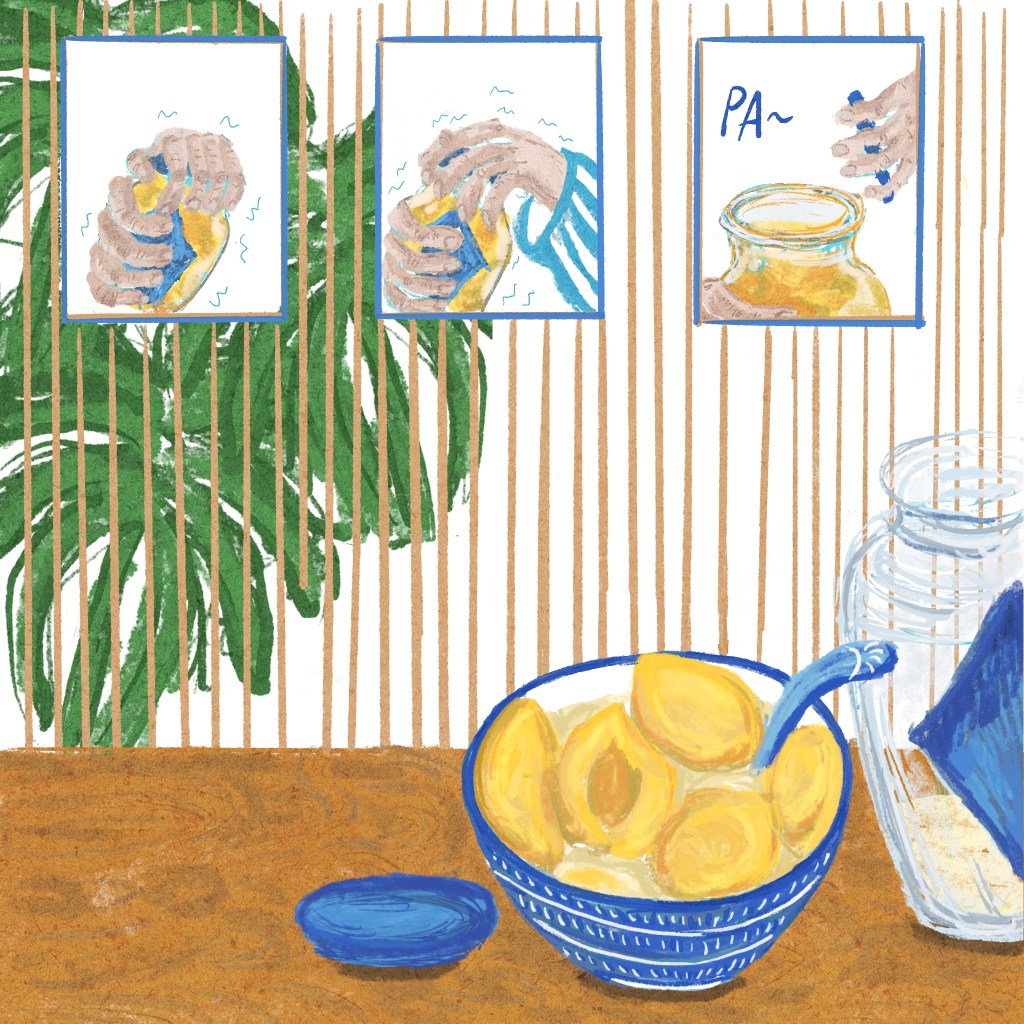
黄桃罐头
Canned Yellow Peaches
“这是我爷爷在癌症转晚期之后给我开的最后一次黄桃罐头。那时候他身体看起来还好。 而且我本身力气不大,打不开罐头,奶奶就说让爷爷帮我开,然后他居然帮我拧开了。这是我们没想到的。
之后也就过了半年,他只剩下床散散步的力气。然后在去年11月就走了。后来我就不再选择吃黄桃罐头了,因为我总是能想起来那个被我爷爷拧开的罐头的味道,其实不好吃,工业香精味很重 ,但是因为是被爷爷打开的,我就吃完了。
之后我尤其会逃避看见这种老式罐头装的东西,因为我会想起爷爷帮我开罐头那个场面。”
“This is the last can of peaches my grandfather opened for me after his cancer progressed to the late stage. At that time, he seemed physically okay. Since I wasn’t strong enough to open the can, my grandmother suggested asking grandpa for help, and unexpectedly, he managed to twist it open for me. It was something we didn’t anticipate.
After that, about six months passed, and he only had the strength to take a short walk. Then, in November of last year, he passed away. I haven’t chosen to eat canned peaches since then because I always remember the taste of the can he opened for me. It wasn’t particularly delicious, with a strong industrial flavor, but because grandpa opened it for me, I finished it.
Since then, I especially avoid seeing things packaged in these old-style cans because it reminds me of the scene where grandpa opened the can for me.”
“在我很小的时候,和姥姥姥爷一起生活在四合院里。每到过年各种亲戚会拿伴手礼回来,其中就有大桶的可乐和雪碧,每次聚会都会剩下一两瓶,在当时那是很新的东西。但是晚上我想喝的时候发现它们总是不见了,后来才知道是被住在我姥姥隔壁的舅舅一家拿走了,他们家有一个表妹。我就和姥姥说,聚会之后可不可以给我留一瓶,我也很喜欢喝。然后又一次聚会后我心里都是这件事情,直到看到有一瓶雪碧被放在了储物间我才安心上床睡觉。后来我隐隐约约听见大人聊天的声音,我知道是舅妈和姥姥。姥姥还是在舅妈来拿一些剩下的零食给表妹吃的时候,把雪碧给舅妈了。
后来很多很多这样的事情,我慢慢发现我是没有父母在身边保护的那一个。所以我变成了一个没有安全感,很为自己考虑的人,以至于我现在都被父母说我和他们不亲近。我不怪父母,也不怪姥姥,只是在每一次被父母这样说的时候心里闷闷的。我现在在英国,有很多可乐雪碧,却始终得不到一份理解。”
“When I was a kid, I lived in a traditional courtyard house with my grandparents. During the Chinese New Year, relatives would bring back various gifts, including large barrels of cola and Sprite. There would be one or two bottles left after each gathering, a quite novel thing at that time. However, every time I wanted to drink them at night, they were always missing. Later, I found out that my uncle and his family, who lived next door to my grandma, took them; they had a younger cousin. I talked to my grandma, asking if they could leave one bottle for me after the gatherings because I really liked drinking them. After another gathering, I kept thinking about it until I saw a bottle of Sprite placed in the storage room, and only then could I go to bed feeling relieved. Later, I vaguely heard the voices of adults chatting, and I knew it was my aunt and grandma. Grandma still gave the Sprite to my aunt when she came to take some leftover snacks for her cousin.
Later, many such incidents happened, and I gradually realized that I was the one without parents around to protect me. So, I became someone without a sense of security, always thinking for myself. This has led to my parents saying I’m not close to them. I don’t blame my parents or grandma; it’s just that every time my parents say something like that, I feel uneasy. Now I’m in the UK, surrounded by plenty of cola and Sprite, yet I still can’t find understanding.”
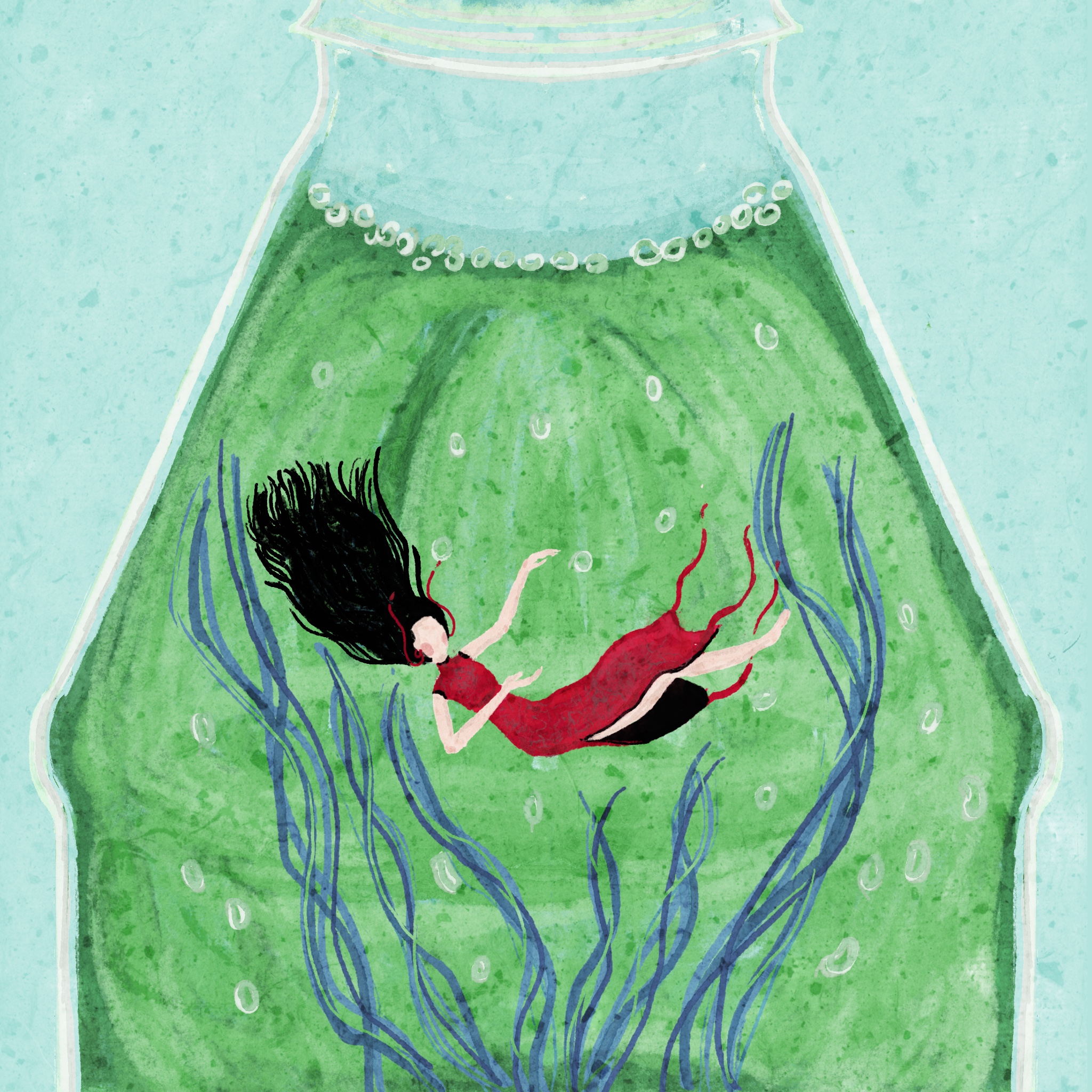
雪碧
Sprite
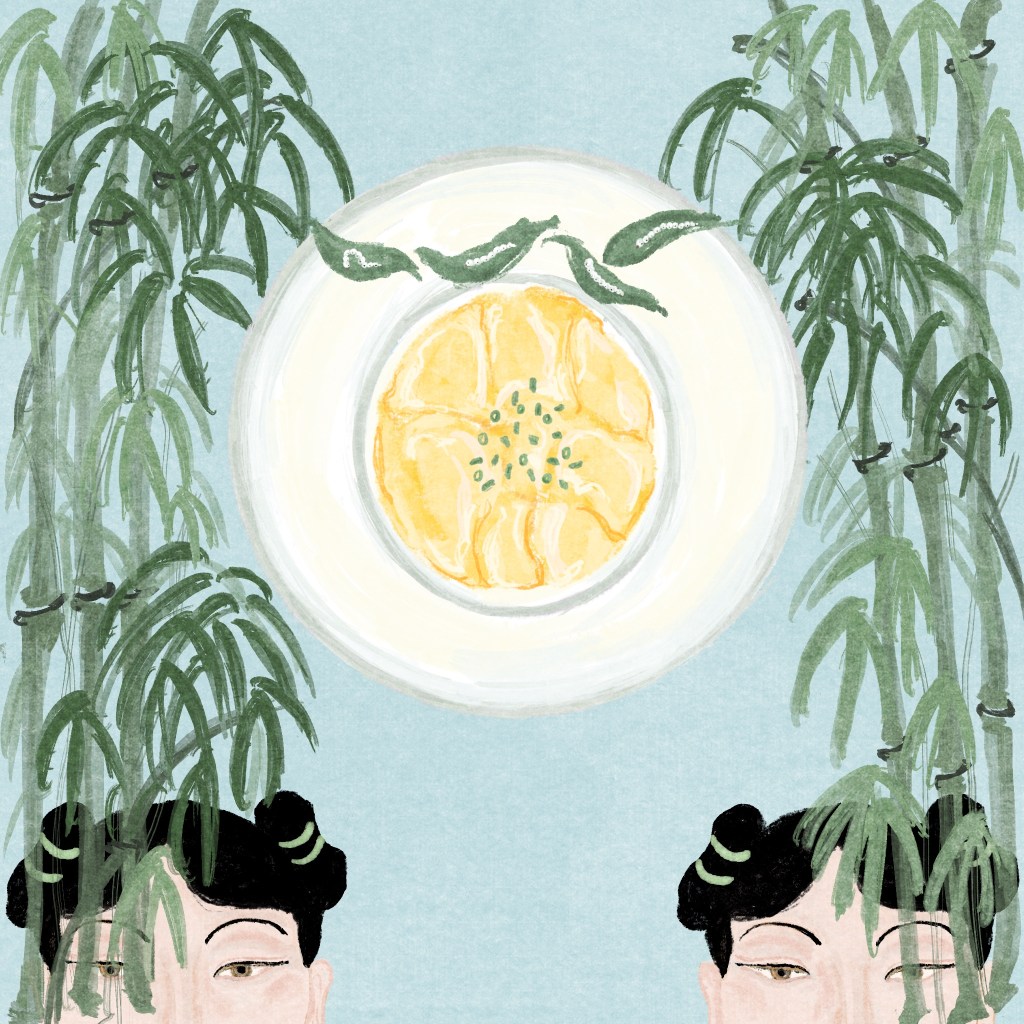
蚕白
Silkworms
“那是一年清明节,我和家人一起回老家‘做清明’。老家除了一些远房的、年迈的亲戚住在祠堂和祖屋旁边就没什么人了,大家几乎都移居到了城里,他们也是基本靠种田生活。我不记得确切的年纪,但那时的我大概十二三岁,由于一直住在城市里,所以对田园的生活充满好奇。当时我在一片小竹林和我表妹玩闹,还不小心用竹子打到了她的头,她哭了好久。
之后我姑姑端了一盘炒鸡蛋来让我们尝尝,那盘炒蛋看起来蛋白特别的多,但我很喜欢吃炒蛋,就很高兴地吃了。吃完饭之后,我姑姑才跟我们说那个白的是蚕,我不知道怎么形容,根本看不出来的,估计是太小了,白花花的像蛋白一样,现在回想都觉得有点恐怖,但是味道确实和炒蛋没有差别。“
“That was during the Qingming Festival. My family and I returned to our hometown. In the ancestral home, aside from some distant and elderly relatives living near the ancestral hall and the old house, there weren’t many people left. Most had moved to the city, relying mainly on farming for their livelihood. I don’t remember the exact age, but I was probably around twelve or thirteen at the time. Having lived in the city, I was curious about rural life.
At that moment, I was playing in a small bamboo forest with my cousin. Accidentally, I hit her head with a piece of bamboo, and she cried for a long time. Later, my aunt brought a plate of scrambled eggs for us to taste. The scrambled eggs looked like they had a lot of egg white, but since I liked scrambled eggs, I happily ate them. After the meal, my aunt told us that the white part was silkworms. I couldn’t describe it; you couldn’t tell at all, probably because they were too small, white and fluffy like egg whites. Looking back now, it seems a bit terrifying, but the taste was indeed similar to scrambled eggs.”
“我对于西餐的启蒙源于我的父亲。
幼时父母离婚,我随母亲生活,常常只能在每隔几周的某天周末才能同父亲见面。他不像母亲那般省吃俭用,对自己阔绰,和我一起时自然也愿意陪我下下馆子。第一次吃豪客来牛排、第一次吃必胜客披萨,都是爸爸带我尝鲜。
父亲其实并不太爱我。随着年岁增长,我与父亲之间的联络越来越少。十年未见,父亲的形象在我脑海中已日渐模糊。但偶尔的时候,我又会想起年少时那些点滴的父爱,是他教我点七分熟的牛排,又替我用刀叉将牛排一块块切开。长大后我便只吃七分熟的牛排,而如今身在海外,我常在外国人面前自如地使用刀叉。我庆幸自己不因没见过世面而感到露怯和窘迫,也只有在这些瞬间,我才能感到曾经的父亲用爱陪我成长过片刻。”
“My introduction to Western cuisine came from my father.
During my early years, my parents divorced, and I lived with my mother. I could only see my father every few weeks on certain weekends. Unlike my frugal mother, he lived more extravagantly and was willing to take me to restaurants when we were together. The first time I tried a steak at Outback Steakhouse, the first time I had pizza at Pizza Hut – these were all experiences guided by my dad.
In reality, my father wasn’t very fond of me. As the years passed, our contact became increasingly infrequent. Ten years went by without seeing each other, and the image of my father in my mind gradually faded. But occasionally, I would recall those small moments of paternal love from my youth. It was him who taught me how to order a medium-rare steak and then used a knife and fork to cut it into pieces for me. As I grew up, I only ate medium-rare steaks, and now, being overseas, I confidently use a knife and fork in front of foreigners. I am grateful that I don’t feel shy or awkward because of my limited exposure to the world. It’s in these moments that I can feel my father’s love helping me grow for a brief period.”
牛排
Steak

土豆片
Potato Chips
“小时候,我和奶奶住在一起,她最喜欢给我煎土豆片,其实就是土豆加盐,很简单,但是很好吃。现在我长大了,有了独立意识,发现家长会不自觉地想控制我的想法,我的想法和奶奶的不一样了,但是想到‘土豆片’我依然能够感觉得到她是爱我的。
希望我们有一天能够达成平衡,彼此相爱,但彼此独立做自己。我爱她,但我首先要爱自己。”
“When I was a child, I lived with my grandmother, and her favorite thing to make for me was pan-fried potato slices. It was just potatoes with salt, very simple but delicious. Now that I’ve grown up and developed my independence, I’ve realized that parents tend to unconsciously want to control my thoughts. My ideas have diverged from my grandmother’s, but when I think of ‘potato slices,’ I can still feel that she loved me.
I hope that one day we can find a balance, loving each other while remaining independent individuals. I love her, but I must first love myself.”
“以前在北京经常吃炸酱面。印象里最早吃的食物其实就是姥姥做的炸酱面,拿一个小铁碗给我盛得满满当当,小时候每次能吃两大碗儿,吃饱了就往地上一趟哈哈哈。可惜我姥姥走得早,后来就是我妈给我做,同样也超好吃,基本上每周必备。我出国早。小学就出来了,那会儿在澳大利亚,当地也没有炸酱面,我只能每个假期回家吃。真的连着三天也不会吃腻。再往后初中去了英国,高中去了美国,吃过很多食物,但是感觉还是最喜欢炸酱面!大学的时候,班上有韩国人,聊天之后才知道韩国也有炸酱面,跟朋友去外面餐馆吃了一次,说实话太腻了,尤其那个酱,再后来就自己做饭,我还特意邀请那个韩国朋友来尝了尝北京的炸酱面哈哈哈哈。黄酱澥好再加入甜面酱,拿炒好的葱油再炒猪肉块儿,然后两个放一起炒,最后再放点葱末加点黄瓜丝就能拌面了,讲真很好吃!”
“I used to eat fried sauce noodles frequently in Beijing. The earliest memory of eating food is actually the fried sauce noodles my grandma made, filling a small iron bowl for me. When I was a child, I could eat two large bowls each time, and after eating, I’d play around on the floor. Unfortunately, my grandma passed away early, so my mom took over, and she made it equally delicious. It became a weekly staple. I went abroad early, leaving for Australia in primary school, where there was no fried sauce noodles. I could only enjoy it during each holiday when I returned home. I never got tired of it, even eating it for three consecutive days.
Later, in middle school in the UK and high school in the US, I tried many foods, but I still loved fried sauce noodles the most! In college, there was a Korean classmate, and after chatting, I learned that Korea also has fried sauce noodles. We went to a restaurant to try it once, but to be honest, it was too greasy, especially the sauce. Later on, I started cooking for myself. I even invited my Korean friend to taste Beijing-style fried sauce noodles. Mixing yellow bean paste with sweet bean sauce, stir-frying it with scallion oil, then stir-frying pork chunks separately. Combining the two stir-fries, adding chopped scallions and cucumber shreds, it’s ready to be mixed with noodles. Honestly, it’s delicious!”
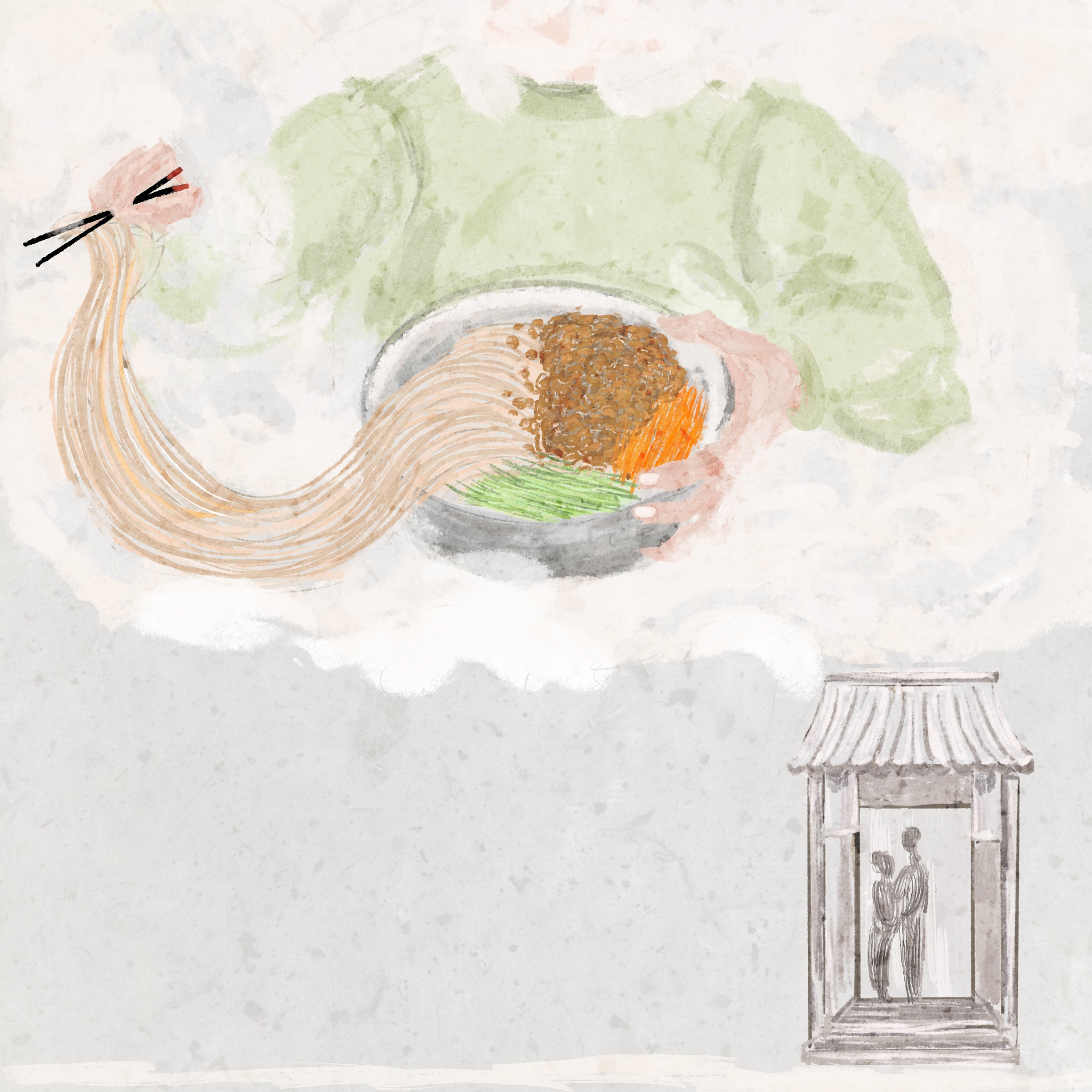
炸酱面
Fried Sauce Noodles
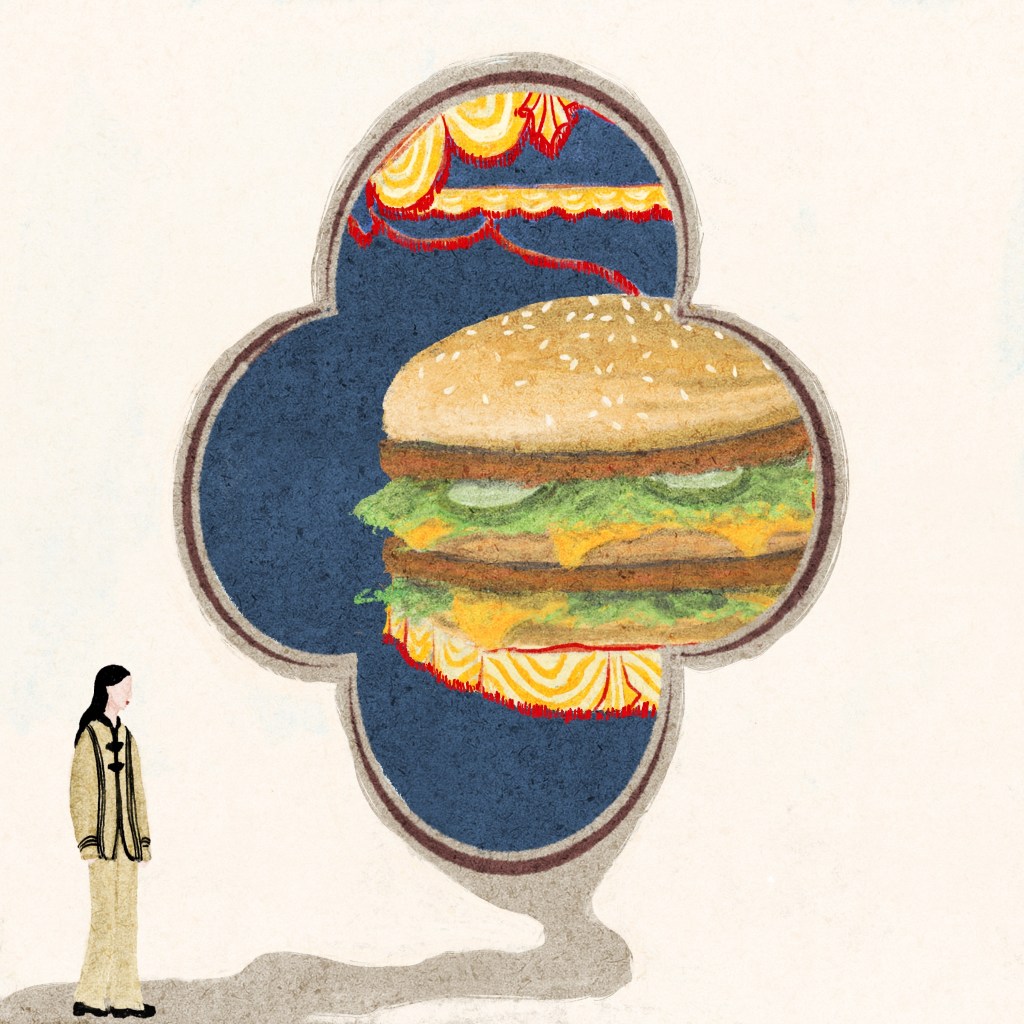
汉堡
Burger
“我是个非常不爱吃面包的人,但是当面包里夹上肉和菜变成汉堡的时候我就特别喜欢吃。我家人不反对我吃快餐,在我很小的时候,我爸妈就会陪着我一起去买汉堡,三个人晚饭前手拉着手去买汉堡,再一路欢声笑语回家,到家后一个人一个汉堡加可乐,配上电视里的综艺节目,这是我童年时期最美好的记忆。
再到后来逐渐长大,学业压力变重,我没有像其他同学一样天天去图书馆学习,而是喜欢去家楼下点的麦当劳一个汉堡,坐在窗边,一边吃一边学一会,累了就抬头看看外面。有一次我在背单词,外面突然下起了暴雨,我一边嚼着汉堡,一边看着街上的人群跑开,那一刻我觉得自己是世界上最安全最幸福的人。
长大后,在我出国读研究生之前,我妈妈知道我肯定会想念国内的麦当劳,所以她在我临行前的半个月里,总是在抖音上帮我抢麦当劳的优惠券,有时候捡到便宜的99元套餐券,她就会发消息告诉我爸,通知他晚上全家一起吃麦当劳,我爸也会说一句:’今天我提早回家。’
出国后,我也总是会在自己写完作业或考试结束后奖励自己一个好吃的汉堡,犒劳用脑过度的自己。再到半年前,我跟我现在的男朋友第一次见面,临时约着出来听音乐会,当天实在找不到合适的饭店,结果选择了离音乐厅很近的快餐店吃汉堡。我在吃的时候汉堡里的酱不小心滴了下来,我男朋友就帮我到处找纸巾。这个临时的决定让我们的第一次见面的气氛变得轻松了很多,我们也越聊越开心了。
虽然汉堡并不是什么山珍海味,但是对我来说它在我目前的人生中扮演了很重要的角色,它是很简单的美味,总能让我在吃的时候发现自己其实就是一个小孩,从来没有长大过。
可能有点流水账,但是我真的好喜欢吃汉堡啊!!!”
“I’m not a ‘bread person’, but when it’s turned into a hamburger with meat and vegetables inside, I love it. My family doesn’t mind me eating fast food. When I was very young, my parents would accompany me to buy hamburgers. The three of us would hold hands and go to buy hamburgers before dinner, laughing and chatting all the way home. After getting home, each person would have a hamburger with a cola, accompanied by variety shows on TV. This is the most beautiful memory of my childhood.
As I grew up, faced with increasing academic pressure, I didn’t go to the library to study every day like other classmates. Instead, I liked to go downstairs to McDonald’s, order a hamburger, sit by the window, eat while studying for a while, and take a break by looking outside when tired. Once, while I was memorizing words, there was a sudden heavy rain outside. I was chewing on a hamburger, watching the crowd on the street scatter, and at that moment, I felt like the safest and happiest person in the world.
Growing up, before I went abroad for graduate school, my mom knew I would miss McDonald’s in China, so in the last half month before I left, she always helped me grab McDonald’s coupons on Douyin (Chinese version of TikTok). Sometimes when she found cheap 99 yuan combo meal coupons, she would message my dad, notifying him that the whole family would have McDonald’s for dinner, and my dad would say, ‘I’ll come home early today.’
After going abroad, I would always reward myself with a delicious hamburger after finishing my homework or exams, pampering myself after overusing my brain. Half a year ago, when I met my current boyfriend for the first time, we spontaneously decided to listen to a concert and couldn’t find a suitable restaurant, so we ended up choosing a fast-food place near the concert hall to eat hamburgers. While I was eating, the sauce from the hamburger accidentally dripped, and my boyfriend helped me look for napkins. This impromptu decision made the atmosphere of our first meeting much more relaxed, and we became happier as we chatted more.
Although hamburgers are not considered a delicacy, they play a significant role in my current life. They represent a simple and delicious pleasure, always making me realize that when I’m eating, I’m just a child who has never really grown up.
It might be a bit of a ramble, but I really love eating hamburgers!!!”
“我2020年来到英国读本科,到现在三年了,一次也没有回家过,因为疫情,因为机票的价格。其实我觉得是因为自己内心不太想回去,想逃离自己的原生家庭。
昨天给父母打电话的时候问起外公外婆的近况,才知道外公已经去世2年了,原来我刚出国没多久他就去世了。我跟外公外婆没有那么亲近,外婆不会使用微信,我出来后只有逢年过节才会跟外婆打招呼。我没有教外公和外婆怎么使用微信…外公和外婆一直对我很好,他们不会表达自己,但是他们对我默默的关心我全都能感受到。外公一直对我引以为傲,他喜欢钓鱼,皮肤被晒得黝黑,一直住在舅舅家的半地下室里的一张小床上。每次我去舅舅家吃饭时,去看外公,他都会擦擦自己的床沿,让我坐在床沿上,因为他觉得床软坐着舒服些,然后自己搬一张钓鱼的小凳子坐在旁边。
出国前,大家一起吃了一顿饭,我没有想到那是最后一次见外公,妈妈说外公已经去了没有病痛的地方,生病期间妈妈跟外公说我在国外回不来,外公也理解。没有见到外公最后一面是我的遗憾,我心里明白大人们的想法,可是我还是觉得很伤心,为什么不能给我打个视频电话,最后看一眼外公。我不知道外公最后躺在病床上在想什么,还痛不痛,会不会怪我没有回去看他….跟妈妈打完电话之后,除了伤心,我居然感觉肚子饿,我一直以为人在伤心难过的时候是会食欲不振的,但是我突然很想吃东西,桌子上有很多食物,我选了巧克力,一口一个巧克力,等回过神来,一盒巧克力都炫完了。吃完了巧克力心情好像真的好了起来,开始继续写论文,继续过生活。一直到了晚上我都没有再想外公的事情。可是今天早晨我突然明白了大人的想法,不是不在意,而是不敢去想,因为生活还要继续…再提起外公的时候从来不哭的妈妈会在我面前流泪,所以不敢提起。”
“I came to the UK to study for my undergraduate degree in 2020, and it has been three years now. I haven’t been home once, not because of the pandemic, not because of the cost of plane tickets. Actually, I feel it’s because deep down, I don’t really want to go back; I want to escape from my original family.
Yesterday, when I called my parents and asked about the recent situation of my grandparents, I found out that my grandfather had passed away two years ago. I had just left the country when he passed away. I wasn’t very close to my grandparents. My grandmother doesn’t use WeChat, so I only greet her during holidays and festivals. I never taught my grandparents how to use WeChat. They have always been good to me, though they may not express it overtly. They silently cared for me, and my grandfather was always proud of me. He loved fishing, and his skin was dark from sun exposure. He lived in the half-basement of my uncle’s house on a small bed. Every time I went to my uncle’s house for a meal and visited my grandfather, he would wipe the edge of his bed, ask me to sit on the bed because he thought it was more comfortable, and then bring a small stool for himself to sit next to me.
Before going abroad, we had a meal together. I didn’t expect it to be the last time I saw my grandfather. My mom said my grandfather had gone to a place without pain. During his illness, my mom told my grandfather that I couldn’t come back from abroad, and he understood. It’s my regret that I didn’t see my grandfather for the last time. I understand the adults’ thoughts, but I still feel very sad. Why couldn’t they make a video call for me to see my grandfather for the last time? I don’t know what my grandfather was thinking lying on the sickbed, whether he was in pain, whether he blamed me for not coming to see him… After finishing the call with my mom, besides feeling sad, I suddenly felt hungry. I always thought that people lose their appetite when they are sad, but I suddenly wanted to eat something. There were many foods on the table, and I chose chocolate. I ate one chocolate after another, and when I came to my senses, I had finished a box of chocolates. After eating the chocolates, my mood seemed to improve. I started to continue writing my paper and live my life. Until the evening, I didn’t think about my grandfather’s matter again. But this morning, I suddenly understood the thoughts of the adults. It’s not that they don’t care; it’s that they dare not think about it because life has to go on… When my mom talks about my grandfather, who never cries in front of me, she will shed tears, so I dare not bring it up.”
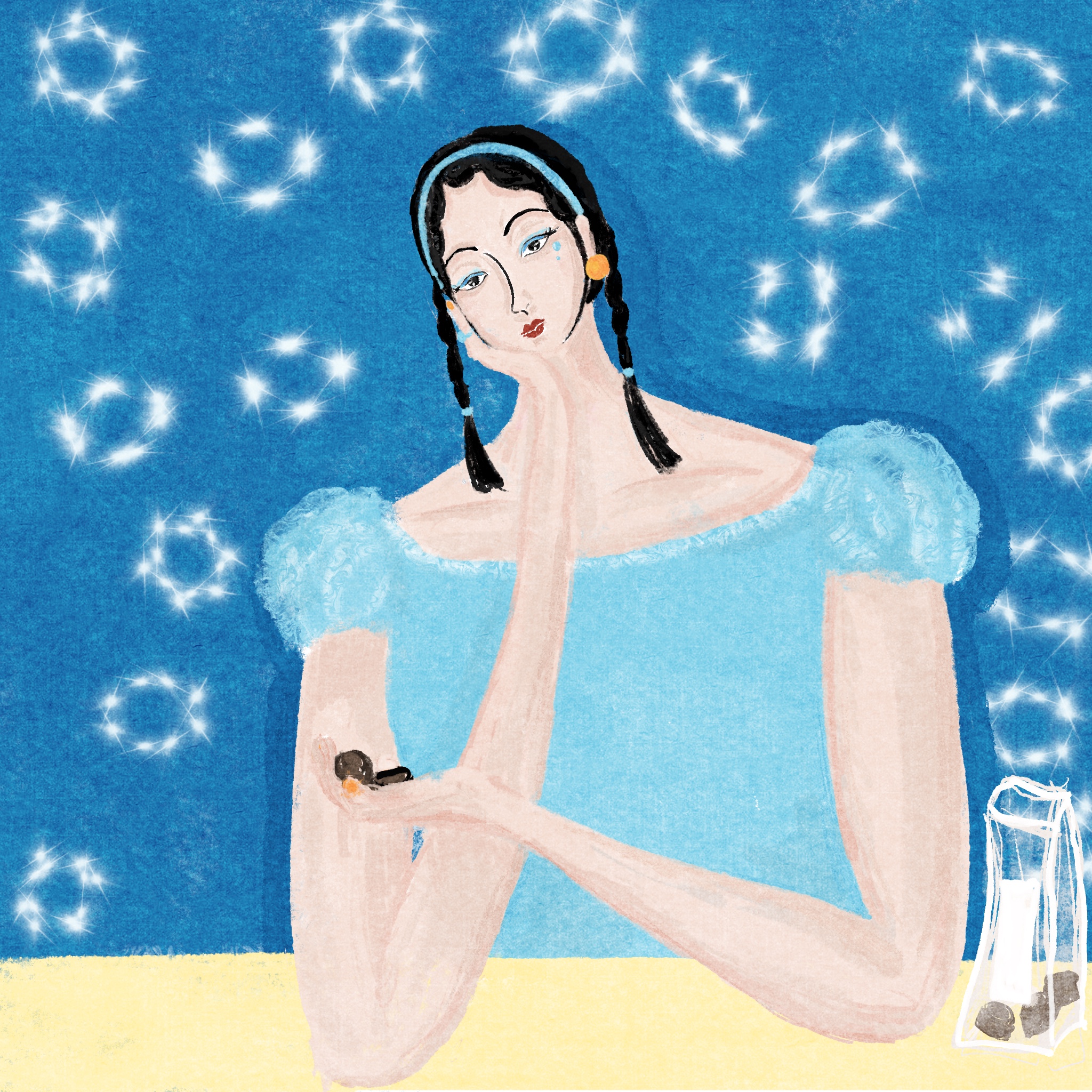
巧克力
Chocolate
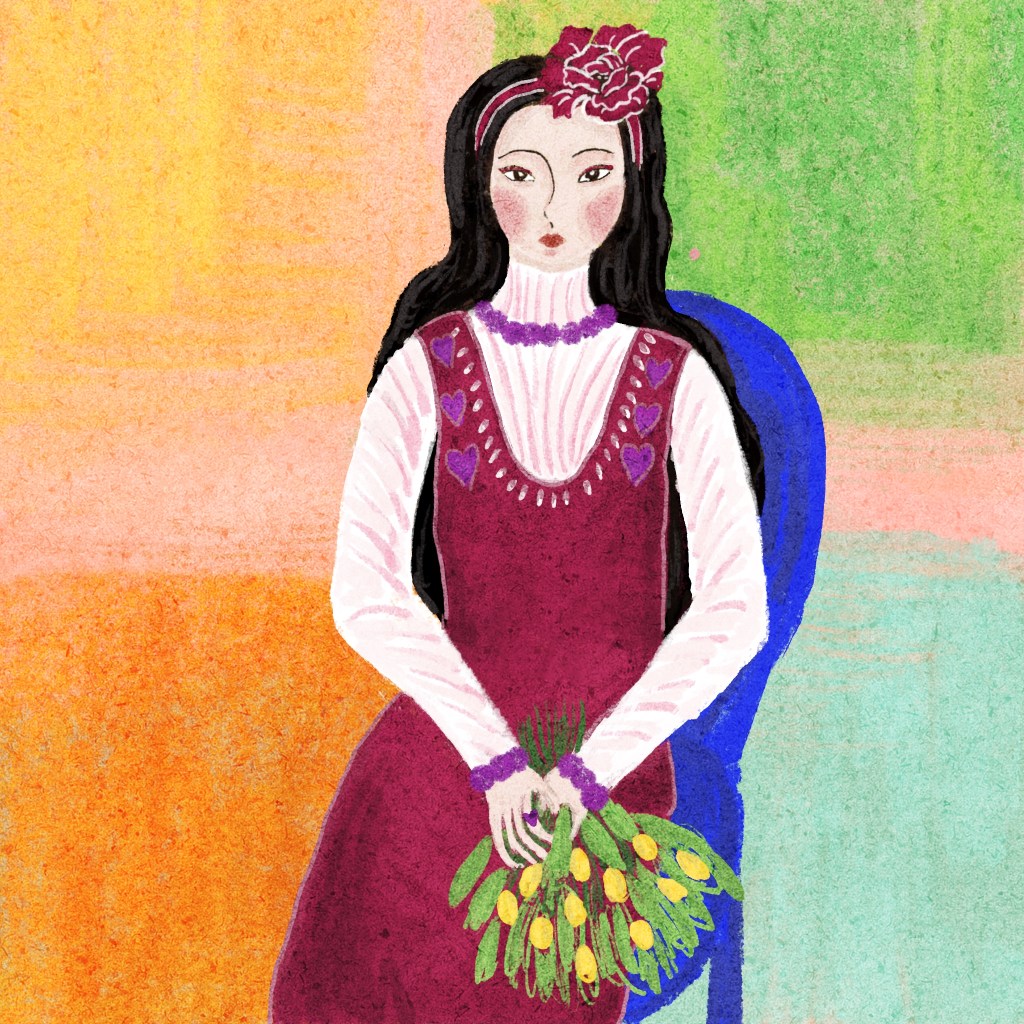
克莉丝汀
Christine
小时候上海有一个连锁的面包店品牌,叫克莉丝汀,其中一家就开在离家最近的小菜场门口。自我记事起似乎喜欢它家的各种东西,健康的和不那么健康的,不知道怎么念的蒟蒻果冻;生病的时候可以呆在床上让外公去买它家的奶酥当早饭;春秋游前一天可以去买口袋三明治,我只喜欢土豆内馅;考试考得好奶奶会在接我放学回家的路上给我买黑森林蛋糕,每次最顶上的巧克力屑屑都粘在外面包的那层塑料纸上,我根本吃不到多少。还有蛋挞,不是葡式的,冰镇的蛋馅和挞皮,小时候是我最喜欢的甜点。
好像没有印象它是什么时候倒闭的了,等我长大的某一天,突然发现很久不见它深红色的招牌和长得像个月饼的logo,去互联网上搜索,知道它早已关得七七八八才猛然意识到,我好像也吃习惯葡式蛋挞了。
“When I was a child, there was a chain bakery in Shanghai called “Christine,” and one of its branches was conveniently located at the entrance of the small vegetable market closest to my home. As far back as I can remember, I seemed to enjoy various items from this bakery, both the healthy and not-so-healthy ones. There was a jelly-like dessert, pronounced as “jǔ jǔ guǒ dòng,” that I couldn’t quite figure out how to pronounce. When I was sick, I could stay in bed, and my grandfather would go buy their flaky pastries for breakfast. The day before school outings in spring and autumn, I would go get a pocket sandwich, with my favorite being the one with a potato filling. If I did well in exams, my grandmother would buy me a Black Forest cake on the way home from school, and each time, the chocolate crumbs on top would stick to the plastic wrap, making it challenging to get a taste. There were also egg tarts, not Portuguese style, but with chilled egg filling and tart crust, which were my favorite dessert as a child.
I don’t seem to remember when it closed down. Then, one day as I grew older, I suddenly noticed its long-missed deep red sign and the logo that resembled a mooncake. Upon searching the internet, I discovered that it had closed down quite some time ago. It was only then that I realized I had grown accustomed to Portuguese-style egg tarts as well.”
一本叫做“Chopped”的剧本,
来自一个叫做Cici Liu的导演
这是一位名字叫做Mei的厨师,在美国的故事。
“‘Chopped’是一个关于食物、我们与食物的关系以及我们的文化和身份的故事。
这个故事源于我的个人经历。
当我刚到美国连续吃了几个星期的汉堡和薯条后,我发现我只想吃一碗简单的米饭。随着时间的流逝,我发现自己离家越来越远。
我紧紧抓住任何能让我想起我的根源的东西–这是一种感觉,一种味道。
我在这里学会了如何烹饪。
然而,当我开始与他人分享我的厨艺并带朋友去中餐馆吃饭时,我发现我的口味是如此与众不同。
在我的成长过程中,我习惯了香料、肠子、青蛙–这些在这里并不容易找到的美食。我独特的口味让我的朋友们感到好奇甚至恐惧。
尽管我们花了很多时间吃东西,一日三餐都在吃,但我还是很难找到一个真正理解我的人。
‘Chopped’ 探讨了一个引人入胜的幻想–当一个女人被愤怒吞噬时,她会怎么做?
我发现自己非常钦佩Mei的精神。
她坚强、才华横溢,而且完全献身于她的手艺。
作为一名杰出的艺术家,Mei 选择采取极端的方式反对她的丈夫,释放她的激情和决心。
我将这幅作品献给我自己,献给所有热爱美食却不得不独自进食的人。”
“Chopped is a story about food, our relationship with food, and inherently, our culture and our identity.
The story comes from a personal place.
When I first arrived in the United States, after weeks of consuming burgers and fries, all I craved was a simple bowl of rice. As time passed and I found myself further away from home,
I clung to anything that reminded me of my roots—a feeling,
a flavor.
I learned how to cook here.
However, as I started sharing my cooking with others and taking friends to Chinese restaurants, I discovered that my palate was different.
Growing up, I was accustomed to spices, intestines, frogs— delicacies not easily found here.
My unique palette became a source of intrigue and even horror for my friends.
Despite the fact that we spend so much time eating, with three meals a day, I struggled to find someone who truly understood me.
Chopped explores a fascinating fantasy— what would a woman do when consumed by anger?
I find myself admiring Mei’s spirit.
She is strong, talented, and completely devoted to her craft.
As a remarkable artist, Mei chooses to take an extreme stand against her husband, unleashing her passion and determination.
I dedicate this piece to myself and everyone who loves food but has to eat alone.”
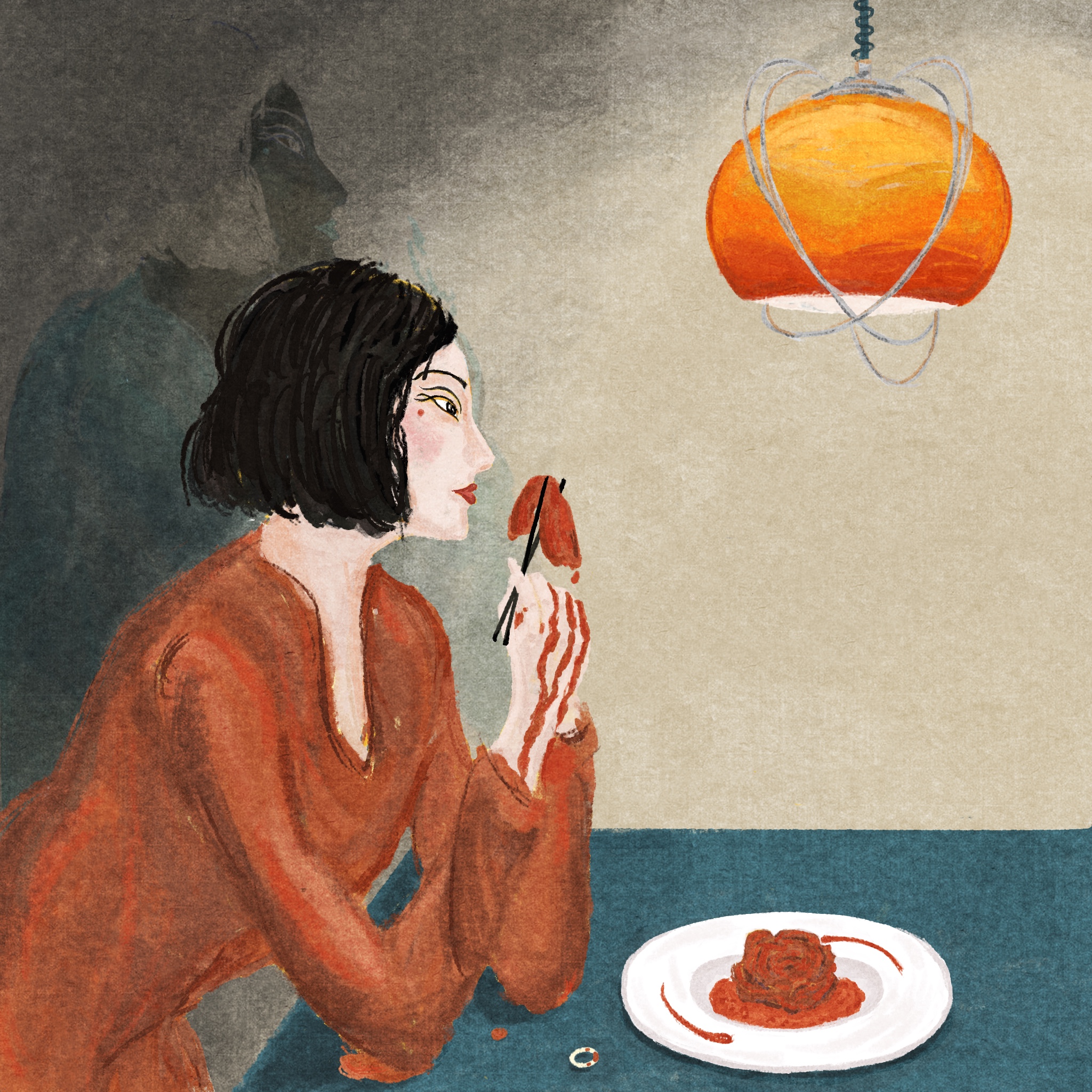
Chopped
By CICI LIU
 shuangsspace